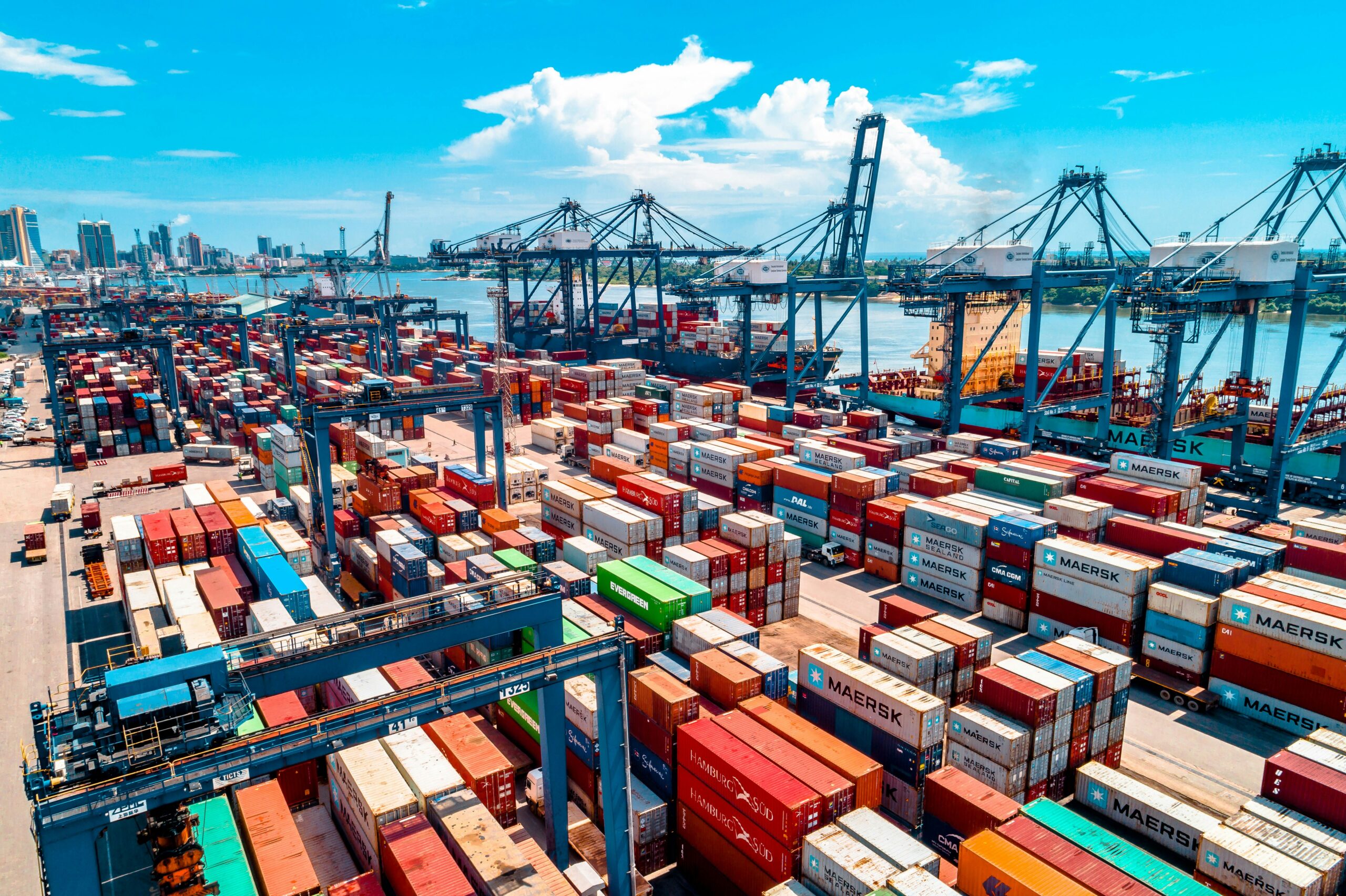
In Focus: How US Port Fees are Reshaping Trade Routes

From 14 October, vessels owned or operated by Chinese companies will face new US port fees starting at $50 per net tonne, rising to $140 by 2028. The charges, enforced by US Customs and Border Protection, will be collected via a new Pay.gov system, with non-payment risking bans on cargo operations or departure clearance. Lower rates will apply to vessels merely built in China, and exemptions will cover most tankers and dry bulk carriers.

Chinese carriers are already adjusting their service networks to limit exposure. OOCL, for example, has announced a new China–Mexico service, bypassing direct US calls. Analysts expect more routings through Canada and Mexico, alongside potential increases in intra-regional services between Central and North America to maintain flows. However, limited availability of non-Chinese tonnage means not all carriers can easily avoid the fees, and smaller vessel-sharing agreements with Chinese operators may come under review.


Ocean
  • August’s early rate increases were short-lived, lasting just one week before carriers dropped levels below July’s, anticipating softer demand in late August.
  • Space remains tight, with vessels largely full 2–4 weeks ahead; late bookings risk extended dwell times.
  • Blank sailings are expected to reduce capacity in the final week of August.
  • Carriers continue frequent schedule changes to manage overbooking.
  • EIR pressure has eased slightly versus July, but congestion remains acute at key Northern European ports (Rotterdam, Hamburg, Bremerhaven, Antwerp, Le Havre). London Gateway remains the UK’s most problematic port, with severe haulier delays prompting new surcharges.
Air

Central China

  • Shanghai (SHA): Market running hot post-summer holiday return; space is tight with rising demand. Early booking is essential.
  • Ningbo (NGB): Surge in electronics shipments is restricting available capacity, pushing up rates.

North China

  • Tianjin (TSN): Market slightly hot; longer transit options available with some carriers. Space typically needs 4–5 days’ notice.
  • Dalian / Beijing (DLC / PEK): Slight rate reductions this week; dense cargo may secure spot space, but volume cargo requires 6–7 days’ notice and may be split. Rainy weather is causing minor inland transport delays.
  • Qingdao (TAO): Market stable; space open to most EU hubs. Spot space available for dense or volume cargo.

South China

  • Guangzhou (CAN): High temperatures may restrict space on some flights; availability checked case by case.
  • Shenzhen (SZX): Market stable with bookings handled individually with carriers.
  • Xiamen (XMN): Airlines have cut space allotments due to hot weather, tightening supply.
Ocean
  • Rates have been adjusted down since the start of August
  • Demand remains flat, and South East Asian ports are continuing to report stronger export volumes than China.
  • Capacity is at around 70–80% of normal, leaving overall space conditions healthy. Congestion remains low, with only slight increases observed on the East Coast.
Air

Central China

  • Shanghai (SHA): USWC: Space stable, but allotment less predictable in hot weather; low big-volume demand. USEC: Space stable; recent increases now levelling off. Allotments remain weather-sensitive.
  • Ningbo (NGB): Space managed case by case.

North China

  • Tianjin (TSN): Market slightly hot; freighter services offer earlier ETDs. Advance booking recommended.
  • Dalian / Beijing (DLC / PEK): Space stable, but volume cargo still needs longer lead times and may be split. Some block space by UA due to volcanic disruption.
  • Qingdao (TAO): Space slightly tight to East Coast but stable to West Coast; spot space remains for dense shipments.

South China

  • Guangzhou (CAN): Hot weather may limit capacity; availability confirmed case by case.
  • Shenzhen (SZX): Slightly hot market; all bookings managed individually with carriers.
  • Xiamen (XMN): Space allotments reduced due to hot weather; availability dependent on actual flight checks.
Ocean
  • IN–NEU rates stabilising in 2H August after early-month increases, while BD–NEU rates are still rising on some carriers.
  • Heavy monsoon rains continue to intermittently halt port operations and disrupt inland transport across Bangladesh, India, and Sri Lanka.
  • Chittagong and Colombo remain highly congested with high yard utilisation and berthing delays.
  • No major equipment shortages reported; however, MSC and CMA blank sailings are cutting capacity on certain weeks.
  • Schedule reliability in May/June reached 69.6%, up 7% from April/May and 18.5% higher year-on-year; Gemini service remains the most reliable.
  • Shippers advised to book 2–3 weeks ahead to secure target sailings.
Ocean
  • Rates are continuing to trend downward in the second half of August, reversing earlier summer highs as demand softens.
  • Strong year-on-year volume growth through the first half of 2025 has given way to a slowdown, driven by shippers frontloading orders ahead of new U.S.–EU tariffs implemented on 1 August. Westbound volumes are expected to fall notably in the remainder of the year.
  • Vessel deployment on North Europe–North America routes remains elevated compared with last year, adding downward pressure on rates.
  • Antwerp is facing its worst delays since the Covid-19 period, with high yard utilisation and long dwell times. Northern European ports such as Rotterdam, Hamburg and Bremerhaven remain heavily pressured, while Southern Mediterranean hubs including Piraeus, Genoa and Valencia are still experiencing yard congestion and multi-day vessel delays.
  • Low water levels on the Rhine and Danube and intermittent rail disruptions in Central and Eastern Europe continue to challenge inland flows, although blank sailing levels are steady.
USA
  • Los Angeles/Long Beach: 1 vessel waiting, 7-day rail dwell.
  • Oakland: 5 vessels waiting, 5-day rail dwell.
  • Seattle/Tacoma: 3 vessels waiting, 7-day rail dwell.
  • Vancouver: 3 vessels waiting, 5-day rail dwell.
  • New York/New Jersey: 2 vessels waiting, 3-day rail dwell.
  • Norfolk: 7 vessels waiting, 3-day rail dwell.
  • Savannah: 7 vessels waiting (up by 2), 2-day rail dwell.
Benelux
  • Antwerp – PSA 913: Yard at very high 90–92%, reefers 60–65%.
  • Antwerp – PSA 869: Yard at critical 65–70%, reefers 45–50%.
  • Antwerp – AGW: Yard stable at 60–65%, reefers 60–65%. Cargo opening remains 5 days before ETA.
  • Rotterdam – ECT: Yard stable at 70–75%.
  • Rotterdam – RWG: Yard high at 80–85%.
  • Rotterdam – DELTA II: Yard low at 27–30%.
  • Rotterdam – APMT MVII: Yard stable at 90–95%.

Europe Public Holidays

We anticipate a shortage of availability and the occurrence of delays around the bank holiday periods. Plan ahead and allow extra time for your products to be delivered.

  • 14 Aug (Thu): Saint Helena*
  • 15 Aug (Fri): Andorra, Austria, Belgium, Croatia, Cyprus, France, Germany*, Greece, Holy See (Vatican City), Italy, Liechtenstein, Lithuania, Luxembourg, Malta, Monaco, Poland, Portugal, Romania, San Marino, Slovenia, Spain, Switzerland*
  • 16 Aug (Sat): Holy See (Vatican City)
  • 20 Aug (Wed): Estonia, Hungary
  • 24 Aug (Sun): Ukraine
  • 25 Aug (Mon): Gibraltar, Guernsey and Alderney, Isle of Man, Jersey, Saint Helena, UK (United Kingdom)*, Ukraine
  • 27 Aug (Wed): Moldova
  • 29 Aug (Fri): Slovakia
  • 30 Aug (Sat): North Cyprus, Türkiye
  • 31 Aug (Sun): Moldova
  • 1 Sep (Mon): Luxembourg*
  • 2 Sep (Tue): Transnistria (PMR)
  • 3 Sep (Wed): San Marino
  • 4 Sep (Thu): North Cyprus
  • 5 Sep (Fri): Albania
  • 6 Sep (Sat): Bulgaria
  • 8 Sep (Mon): Andorra, Bulgaria, Liechtenstein, Macedonia, Malta, Spain*, Spain*, Spain*
  • 10 Sep (Wed): Gibraltar
  • 11 Sep (Thu): Spain*, Switzerland*
  • 15 Sep (Mon): Slovakia, Spain*
  • 17 Sep (Wed): Holy See (Vatican City), Spain*
  • 20 Sep (Sat): Germany*
  • 21 Sep (Sun): Malta
  • 22 Sep (Mon): Bulgaria, Switzerland*
  • 24 Sep (Wed): Austria*
  • 25 Sep (Thu): Switzerland*
  • 27 Sep (Sat): Belgium*
  • 28 Sep (Sun): Czech Republic

The route ahead

The information that is available in the Zencargo Market Update comes from a variety of online sources, partners and our own teams. Click below to learn more about how Zencargo can help make your supply chain your competitive advantage.

Get In Touch

Event