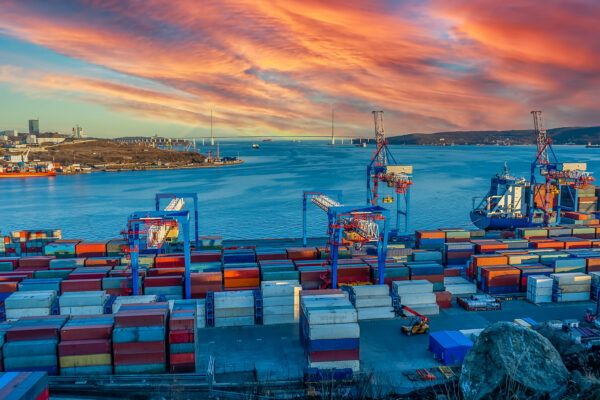
In Focus: Tariff tumult

The US Supreme Court struck down several of President Trump’s expansive global tariffs, ruling that the 1977 International Emergency Economic Powers Act (IEEPA) did not provide the authority to implement them. The decision does not affect all of Trump’s tariffs, leaving in place those imposed under separate statutes, such as the steel and aluminium measures under Section 232. However, it upends the country-by-country “reciprocal” tariffs, which range from 34% for China to a 10% baseline for the rest of the world.

Following the court’s decision, President Trump signed an executive order imposing a fresh 10% global flat-rate tariff, with the possibility of a 15% tariff for some countries mooted on Wednesday. The new rate was applied under Section 122(a) of the Trade Act of 1974, intended to address ‘balance of payments’ deficits in international trade, rather than the issue of trade deficits, which were the stated justification for the original tariffs

These new tariffs have a limit of 150 days, after which they will need to be approved by an act of Congress. In the meantime, they may well see legal challenges from affected businesses contesting the grounds on which they have been applied.

Other tariffs that remain rely on other legal foundations, including Section 232, which allows regulation based on national security concerns and includes tariffs on steel and aluminium imports. Some countries – notably China – are still subject to tariffs under section 301, which allows duties to combat unfair trade practices. Any new tariffs imposed under Section 301 would first require a formal investigation.

The new policy raises the effective rate for countries that had previously agreed their own deals, including the UK, the EU, and Japan. In response, the European Union has officially put its framework trade agreement with the US on hold, though the UK has said their own deal will remain. For countries such as China and Brazil, the new 15% baseline is lower than the tariffs they had previously faced.

Already, some US companies are looking to sue the Federal government to reclaim duties paid under the old regime. Senate Democrats have proposed legislation to mandate full refunds with interest, following estimates from Penn-Wharton that over $175 billion in tariff revenue may now be refundable.

Ocean
  • Several major carriers have announced proposed rate increases in advance of upcoming quarterly tenders. However, the true market direction won’t be clear until Chinese factories fully resume operations. 
  • While capacity is being released under long-term and NAC deals for March, short-term availability varies heavily by carrier. CMA is overbooked by 3-4 weeks, with Gemini and Premier also full through February with rolling expected into March for the former. Availability for MSC and Premier Alliance is expected to improve in March.
  • Weather in the Bay of Biscay has improved, but terminals are still feeling the after-effects of recent storms (including temporary stoppages due to strong winds). Expect ongoing operational challenges, high yard utilisation, and schedule deviations. 
  • The Chinese New Year holiday is currently causing minor vessel delays of roughly 1-3 days across main Chinese ports.
  • Carriers are also actively managing capacity over the next fortnight, with a 20% capacity reduction expected in week 9 and a sharper cut of 45% in week 10.
Air

Central China (SHA/NGB)

  • SHA: Market is slack with ample space as suppliers return from the holiday, though demand is expected to increase next week. Special pricing is currently needed to fill space through early March.
  • NGB: Demand remains low due to the post-holiday lull, resulting in decreased prices. Space and rates are being quoted case by case.

North China (DLC/TSN/TAO/PEK)

  • TSN: The market is slack with stable rates. Lower rates are available for longer transit times, but space requires booking 6-7 days in advance (or 4-5 days for earlier departures).
  • DLC/PEK: Rates remain stable, with spot options available for dense cargo. Volume cargo requires booking 6-7 days ahead and may be subject to flight splits.
  • TAO: The market is slightly busier, with rates edging down slightly but space remaining a bit tight to most EU hubs.

South China (CAN/SZX/XMN)

  • CAN: Space was tight leading up to the holiday, with discount rates anticipated during the holiday period itself. 
  • SZX: Rates are trending upward this week for deferred services. All shipments should be checked case by case.
  • XMN: Market conditions and rates are largely stable following a pre-holiday bump in bookings. Transport and handling operations remain normal.
Ocean
  • FAK rates implemented in early February have been extended through to the end of the month, though overall levels have softened across the West Coast, East Coast, and inland destinations compared to late January. Peak Season Surcharges (PSS) have been postponed until the beginning of March.
  • Demand remains slow, leading carriers to reduce capacity to roughly 57-60% for Weeks 9 and 10. Capacity is expected to recover to over 80% by the second week of March, with carriers currently focused on filling vessels with rolled cargo.
  • Congestion across US ports remains low, though there are some ongoing delays impacting West Coast rail networks.
  • The Ocean Alliance will launch its ‘Day 10 Product’ starting in April 2026, with some Transpacific services phasing in through May in response to the growth in imports from Southeast Asia. The alliance is introducing double-weekly service loops directly from Haiphong (Vietnam) and Laem Chabang (Thailand) to the US West Coast, bypassing traditional transhipment hubs like Port Klang.
  • A new trade agreement was signed between the US and Taiwan in mid-February, though its effective date remains unclear. Under this agreement, the minimum total tariff on Taiwanese goods will be reduced. This shift is expected to drive increased Taiwanese investment in US semiconductor supply chains, electronics manufacturing, and AI applications.
Air

Central China (SHA/NGB)

  • SHA: Demand is largely non-existent as suppliers are still returning from the holiday, though space is adequate despite some cancelled flights. Special rates can be offered for dense and volume cargo, but overall, special pricing is needed to fill space until early March.
  • NGB: Updates are limited, with the market broadly mirroring the lack of demand seen across the rest of the region.

North China (DLC/TSN/TAO/PEK)

  • TSN: Operating in a slack market with lower rates available on specific freighter flights. Space still requires 6-7 days of advance booking.
  • DLC/PEK: Rates are holding stable due to a lack of overall demand. Dense cargo can access spot rates, while volume cargo needs 6-7 days advance notice and acceptance of flight splits.
  • TAO: In contrast to other regions, the US lane is busy. Space is tight to both the West and East coasts, and rates are trending upwards.

South China (CAN/SZX/XMN)

  • CAN: Demand remains low due to the post-holiday manufacturing lull. Spot rates should be checked case by case according to actual flight dates.
  • SZX: E-commerce volumes have not yet recovered, leaving the market in low demand. Rates should be quoted case by case.
  • XMN: Booking volumes picked up in the weeks leading into the holiday, keeping conditions and rates largely stable week-on-week. Final rates remain dependent on actual flight checks.
Ocean
  • While February General Rate Increases (GRIs) from India to North Europe largely failed to materialise, March Freight All Kinds (FAK) rates are showing a significant upward trend compared to last month. Conversely, early indications for March rates out of Bangladesh suggest very little movement, remaining broadly stable against February levels.
  • Ongoing congestion is causing delays, with shippers currently experiencing roughly one to two cargo rollovers across major carriers such as MSC, ONE, and CMA. To help manage connections, MSC is currently utilising Vizhinjam port as an alternative.
  • Chittagong is gradually recovering following recent strikes, with no current industrial action. However, operations are heavily prioritising import discharges, often at the expense of loading exports and empty containers. Depots are being urged to clear yards quickly. Significant congestion remains, with 4-5 days of berthing delays and yard occupancy sitting around 74%.
  • Shippers should factor in further delays at Chittagong during Ramadan (19th Feb – 20th March), as daily operations are informally suspended for an additional 3-4 hours beyond normal break times.
  • There is a noted shortage of 20-foot containers across most Inland Container Depots (ICDs) in the Delhi region.
  • Capacity management continues with upcoming blanked sailings, including the CMA INDAMEX service in Week 10 and the HMM/ONE INX service in Week 11.
  • CMA is strengthening its strategic footprint in India. The carrier has commissioned six new 1,700 TEU dual-fuel LNG vessels at Cochin Shipyard and is becoming directly involved in local container manufacturing.
Ocean
  • Demand remains soft with no immediate signs of recovery though spot rates are holding generally stable across the trade lane, with only minor upward adjustments. 
  • Capacity continues to outstrip demand, prompting carriers to actively implement blank sailings (with capacity dropping nearly 10% week on week).
  • The market faces renewed uncertainty following recent US political developments and the announcement of potential 10-15% global tariffs under Section 122.
  • Overall schedule reliability has weakened recently, dropping to roughly 61.5%. However, performance varies significantly by carrier, with niche operators performing markedly better than others. 
  • The Unity Bridge service will conclude in March, and the Liberty Bridge service will make its final call to Baltimore at the end of the month. Subsequently, CMA will launch a revamped Liberty Bridge Service calling at New York, Norfolk, Charleston, and Savannah.
  • Severe winter weather and ongoing congestion continue to affect key Northern European hubs, notably Antwerp, Hamburg, and Rotterdam. Inland disruption is also a factor, with snow and adverse weather in Poland severely impacting local road and rail networks.
  • Congestion and severe weather are equally impacting destination ports. Canadian operations face delays of approximately 3-4 days across Montreal and Vancouver. In the US, average waiting times sit at roughly 4 days in New York and 3 days in Los Angeles. Recent severe weekend weather in New York is expected to cause further operational disruptions throughout this week.
USA

Ocean

    • US West Coast (LA/LB): 0 vessels waiting (no change), with a 7-day dwell on rail terminals due to a backlog of pre-CNY cargo.
    • Oakland: 2 vessels waiting (no change), with a 6-day rail dwell.
    • Seattle/Tacoma: 1 vessel waiting (up by 1), with a 5-day rail dwell.
    • Canada (Vancouver): 0 vessels waiting (down by 2), with a 7-day rail dwell.
    • US East Coast (NY/NJ): 1 vessel waiting (no change), with a 4-day rail dwell.
Benelux

Antwerp

    • PSA 913: Yard utilisation is elevated at 80-85%, with reefer utilisation at 60-65%.
    • PSA 869: Yard utilisation has decreased to 55-60%, with reefer operations running at a normal utilisation of 55-60%.
    • AGW: Yard utilisation remains increased at 70-75%, while reefer utilisation has reduced to 60-65%. Empties are fluctuating between 55-80%, and cargo opening times are now set to 6 days prior to vessel ETA.

Rotterdam

    • ECT: The yard remains at an elevated level of 75-80% utilisation.
    • RWG: Yard utilisation is holding at a critical level of 80-85%.
    • DELTA II: Yard utilisation is low at 40-45%, with reefers running at 30-35%.
    • APMT MVII: Yard utilisation is currently operating at a higher level of 90-95%.

Europe Public Holidays

We anticipate a shortage of availability and the occurrence of delays around the bank holiday periods. Plan ahead and allow extra time for your products to be delivered.

  • 28 February (Sat): Spain (regional observance).
  • 1 March (Sun): Bosnia and Herzegovina (FBiH), Switzerland.
  • 2 March (Mon): Spain.
  • 3 March (Tue): Bulgaria.
  • 7 March (Sat): Russia.
  • 8 March (Sun): Belarus, Germany, Moldova, Russia, Transdniestria (PMR), Ukraine.
  • 9 March (Mon): Russia, Transdniestria (PMR), Ukraine.
  • 11 March (Wed): Lithuania.
  • 14 March (Sat): Albania, Andorra.
  • 15 March (Sun): Hungary.
  • 16 March (Mon): Albania.
  • 17 March (Tue): Ireland (Eire), UK (United Kingdom).
  • 19 March (Thu): Austria, Holy See (Vatican City), Liechtenstein, Malta, Spain, Switzerland, Türkiye.
  • 20 March (Fri): Albania, Bosnia and Herzegovina (FBiH), Kosovo, Macedonia, North Cyprus, Spain, Türkiye.
  • 21 March (Sat): North Cyprus, Türkiye.
  • 22 March (Sun): Albania, North Cyprus, Türkiye.
  • 23 March (Mon): Albania.
  • 25 March (Wed): Cyprus, Greece, San Marino.
  • 31 March (Tue): Malta.
  • 1 April (Wed): Cyprus, San Marino.
  • 2 April (Thu): Andorra*, Denmark, Faroe Islands, Greenland (Kalaallit Nunaat), Iceland, Norway, Portugal*, Spain, Svalbard and Jan Mayen, Switzerland*.
  • 3 April (Fri): Andorra, Czech Republic, Denmark, Estonia, Faroe Islands, Finland, France*, Germany, Gibraltar, Greenland (Kalaallit Nunaat), Guernsey and Alderney, Hungary, Iceland, Ireland (Eire), Isle of Man, Jersey, Latvia, Liechtenstein, Luxembourg*, Malta, Netherlands*, Norway, Portugal, Saint Helena, Slovakia, Spain, Svalbard and Jan Mayen, Sweden, Switzerland*, UK (United Kingdom), Åland (Ahvenanmaa).
  • 4 April (Sat): Andorra*, Sweden*.
  • 5 April (Sun): Albania, Bosnia and Herzegovina (FBiH), Croatia, Denmark, Estonia, Faroe Islands, Finland, Germany, Greenland (Kalaallit Nunaat), Holy See (Vatican City), Iceland, Italy, Kosovo, Liechtenstein, Lithuania, Netherlands, Norway, Poland, Portugal, San Marino, Slovenia, Svalbard and Jan Mayen, Sweden, Åland (Ahvenanmaa).
  • 6 April (Mon): Albania, Andorra, Austria, Belgium, Bosnia and Herzegovina (FBiH), Croatia, Czech Republic, Denmark, Faroe Islands, Finland, France, Germany, Gibraltar, Greenland (Kalaallit Nunaat), Guernsey and Alderney, Holy See (Vatican City), Hungary, Iceland, Ireland (Eire), Isle of Man, Italy, Jersey, Kosovo, Latvia, Liechtenstein, Lithuania, Luxembourg, Malta, Monaco, Netherlands, Norway, Poland, Saint Helena, San Marino, Slovakia, Slovenia, Spain*, Svalbard and Jan Mayen, Sweden, Switzerland*, UK (United Kingdom)*, Åland (Ahvenanmaa).
  • 9 April (Thu): Kosovo.
  • 10 April (Fri): Bosnia and Herzegovina (FBiH)*, Bulgaria, Cyprus, Greece, Montenegro, Romania, Serbia.
  • 11 April (Sat): Bulgaria, Serbia.
  • 12 April (Sun): Albania, Bosnia and Herzegovina (FBiH)*, Bulgaria, Greece, Kosovo, Moldova, Romania, Serbia, Ukraine.
  • 13 April (Mon): Albania, Bosnia and Herzegovina (FBiH)*, Bulgaria, Cyprus, Greece, Kosovo, Macedonia, Moldova, Montenegro, Romania, Serbia, Transdniestria (PMR).
  • 14 April (Tue): Cyprus*.
  • 20 April (Mon): Belarus, Moldova, Transdniestria (PMR).
  • 21 April (Tue): Belarus.
  • 23 April (Thu): Iceland, North Cyprus, Spain*, Spain*, Türkiye.
  • 25 April (Sat): Faroe Islands*, Italy, Portugal.
  • 27 April (Mon): Netherlands, Slovenia.
  • 28 April (Tue): Gibraltar.
Traffic bans

24.02.2026

  • AT | Austria 00:00 – 05:00; 22:00 – 24:00
  • CH | Switzerland 00:00 – 05:00; 22:00 – 24:00
  • LI | Liechtenstein 00:00 – 05:00; 22:00 – 24:00

25.02.2026

  • AT | Austria 00:00 – 05:00; 22:00 – 24:00
  • CH | Switzerland 00:00 – 05:00; 22:00 – 24:00
  • LI | Liechtenstein 00:00 – 05:00; 22:00 – 24:00

26.02.2026

  • AT | Austria 00:00 – 05:00; 22:00 – 24:00
  • CH | Switzerland 00:00 – 05:00; 22:00 – 24:00
  • LI | Liechtenstein 00:00 – 05:00; 22:00 – 24:00

27.02.2026

  • AT | Austria 00:00 – 05:00; 22:00 – 24:00
  • CH | Switzerland 00:00 – 05:00; 22:00 – 24:00
  • LI | Liechtenstein 00:00 – 05:00; 22:00 – 24:00

28.02.2026

  • AT | Austria 15:00 – 24:00
  • AT | Austria 00:00 – 05:00; 22:00 – 24:00
  • AT | Austria 07:00 – 15:00
  • FR | France 07:00 – 18:00
  • FR | France 22:00 – 24:00
  • LU | Luxembourg 21:30 – 24:00
  • LU | Luxembourg 23:30 – 24:00
  • CH | Switzerland 00:00 – 05:00; 22:00 – 24:00
  • HU | Hungary 22:00 – 24:00
  • IT | Italy 07:00 – 15:00
  • LI | Liechtenstein 00:00 – 05:00; 22:00 – 24:00

The route ahead

The information that is available in the Zencargo Market Update comes from a variety of online sources, partners and our own teams. Click below to learn more about how Zencargo can help make your supply chain your competitive advantage.

Get In Touch

Event