AI Playbook | Transforming Supply ChAIn Into Your Competitive Advantage
Scroll to find out more
Scroll to find out more

Discover how AI is transforming global supply chains from reactive operations into predictive, data-driven ecosystems. This playbook explores practical applications of AI across logistics, finance, and planning — showing how smarter technology, better data, and human expertise combine to turn supply chains into a true competitive advantage.
Supply chains have never been easy. Uncertainty, rising costs, and constant disruption are now the baseline, not the exception. Global shocks like the closure of the Strait of Hormuz, Suez Canal blockage and Red Sea reroutes add to everyday challenges: missed cargo ready dates, late trucks, and stretched teams. Leaders are asked to do more with less—maintain precision in a volatile market, cut costs without cutting corners, and keep teams motivated while balancing spreadsheets and inboxes.
Predictability is gone, but precision is more critical than ever. Businesses holding on to old processes risk falling behind, while competitors leveraging technology can plan smarter, move faster, and execute more efficiently.
AI adoption is accelerating, yet only 9% of organisations use AI widely across their supply chains. This shows a clear opportunity for strategic, high-impact deployment, rather than shallow experimentation.
At Zencargo, we see a turning point: AI closes visibility gaps, enables strategic exception management, converts siloed data into actionable insights, and transforms reactive firefighting into proactive planning. This playbook explains why AI matters, where it delivers measurable value today for every stakeholder within the supply chain, and how companies can integrate it effectively, aligning supply chain performance with wider business KPIs.

Today, businesses face unprecedented challenges: rising costs, market volatility, geopolitical disruption, scattered data, and outdated manual processes, to name a few. As a result, teams are often stuck in firefighting mode, struggling to maintain visibility and precision, two areas in which AI can drive significant improvement. However, while momentum in this space exists, progress is slow; only23% of supply chain leaders report having a formal AI strategy, while McKinsey finds that78% of organisations use AI in at least one function.
The reason for this is clear. Traditionally, supply chains are viewed as a back-office initiative. Front-of-house teams (such as Merchandising, Sales and Marketing) are integrating AI-powered tools into workflows to ease repetitive, manual tasks. Logistics teams are missing out on a huge opportunity; the ability to foresee challenges – to turn hindsight into foresight – presents a chance to capitalise on supply chains as a competitive advantage.
There is no denying that product and brand are vital; however, getting the right product in front of customers at the right time gives businesses an edge. And we aren’t going to get there while we’re stuck in spreadsheets, buried beneath inconsistent documentation, and following up on countless emails.
Let’s explore how AI can transform reactive operations to predictive, precise, and efficient systems, and help leaders make smarter, faster decisions.
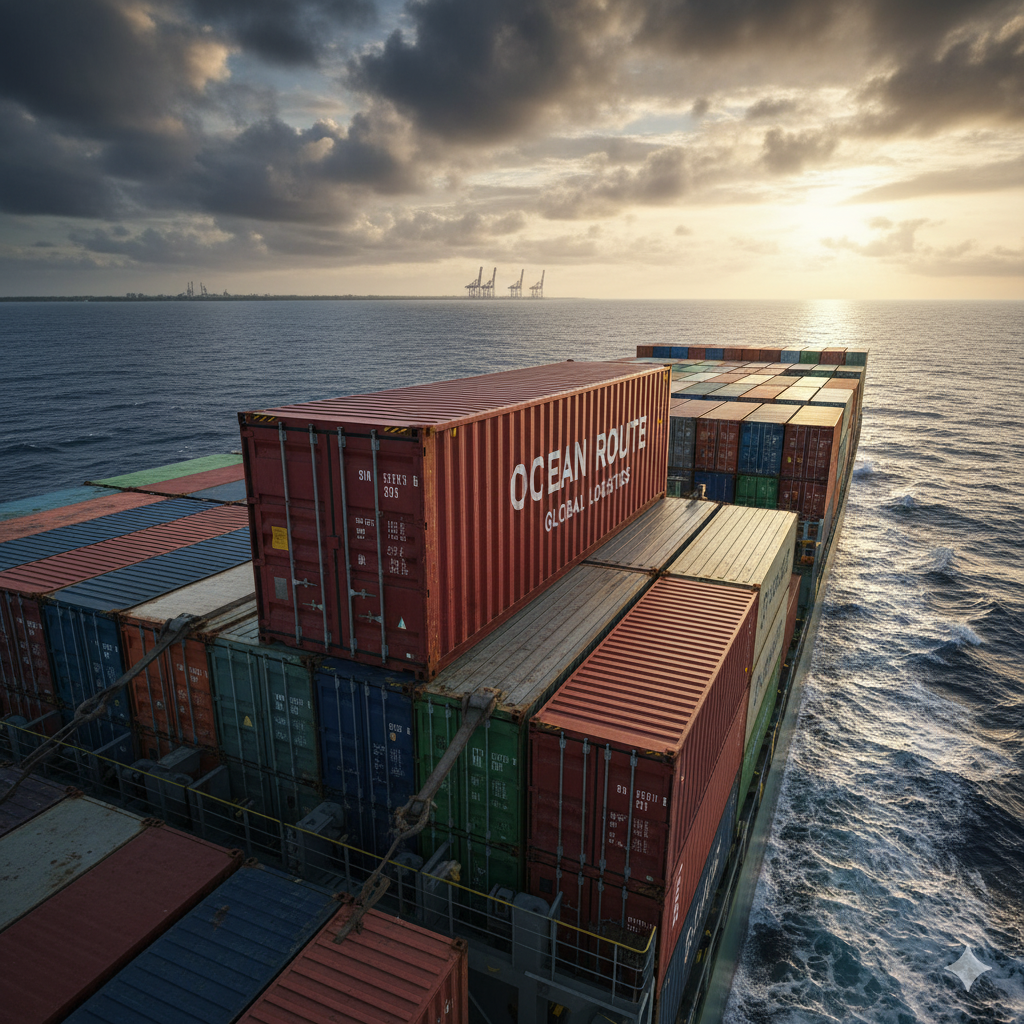
Artificial Intelligence (AI) is a field of computer science focused on creating systems that perform tasks typically requiring human intelligence, such as reasoning, problem-solving, understanding language, recognising patterns, and making decisions.
Supply chain and logistics, as a sector, is highly fragmented, spread across timezones, geographies and relying heavily on manual processes, phone calls, emails, and disparate systems. This creates inefficiencies; underutilised shipping capacity and administrative costs can account for up to a fifth of the cost of moving goods.
AI moves beyond simple digitisation, enabling predictive, prescriptive, and autonomous capabilities that power data-driven decision-making and operational execution. The AI in logistics market is projected to grow from $26.35 billion in 2025 to $707.75 billion by 2034—a CAGR of 44.4%—illustrating massive opportunity for innovation. Yet, adoption is not yet universal: while 70% of logistics companies report using AI solutions, many struggle with integration, data quality, and workforce readiness.
Challenge: Traditional supply chains are reactive, managing crises as they occur. Delays are often discovered too late, disrupting planning.
Solution: AI platforms analyse vast datasets—geopolitics, weather, port congestion, carrier performance, customs rules, and demand signals—to predict disruptions, delays, or cost changes. This includes forecasting port delays weeks in advance, predicting demand shifts with high precision, and identifying optimal shipping windows and routes.
More than half of executives surveyed by PwC state that AI is already used in at least a few areas to anticipate and mitigate supply-chain disruptions.
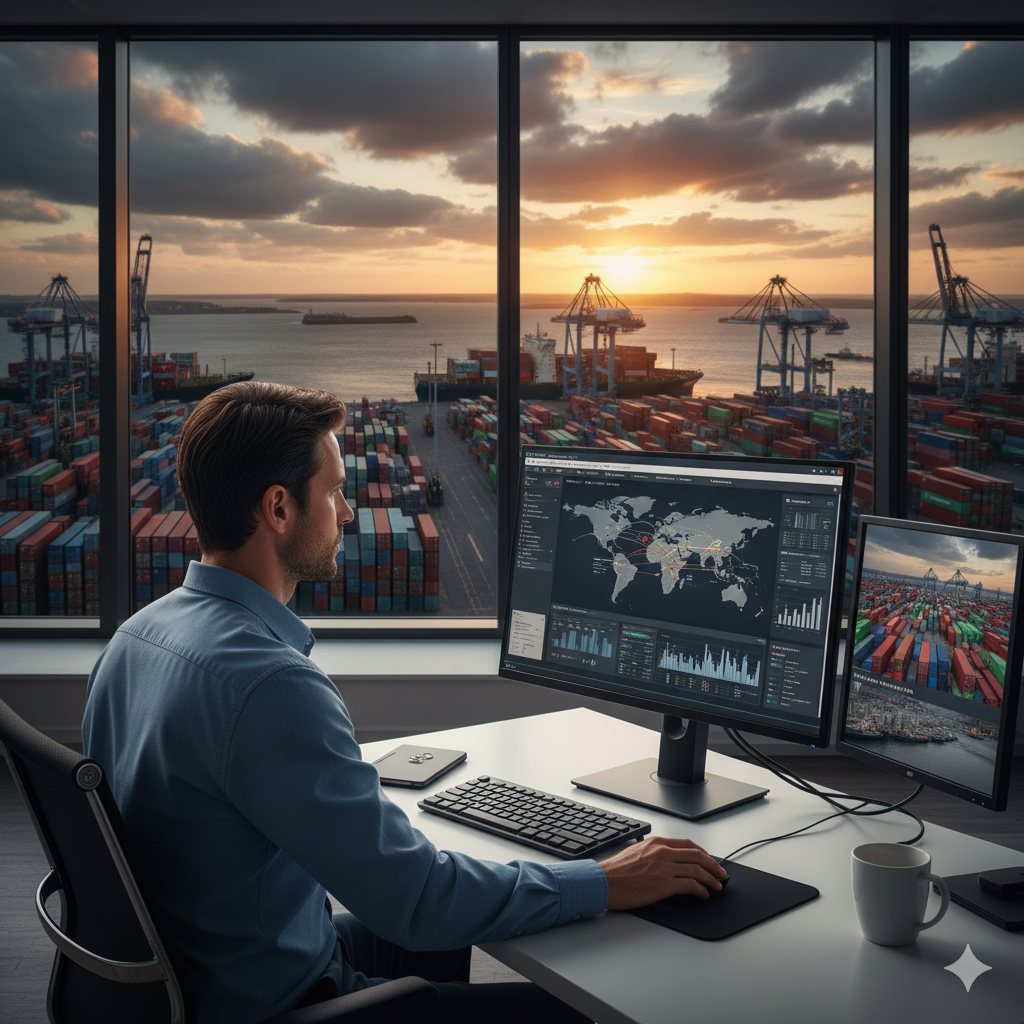
Challenge: Optimising routes and carrier selection is complex, involving numerous factors that are difficult for people to analyse at scale.
Solution: AI can dynamically orchestrate entire networks, instantly analysing millions of permutations for routing, carrier selection, consolidation, and mode of transport. It considers factors beyond just cost or speed, such as load size, capacity, sustainability, risk, and reliability.
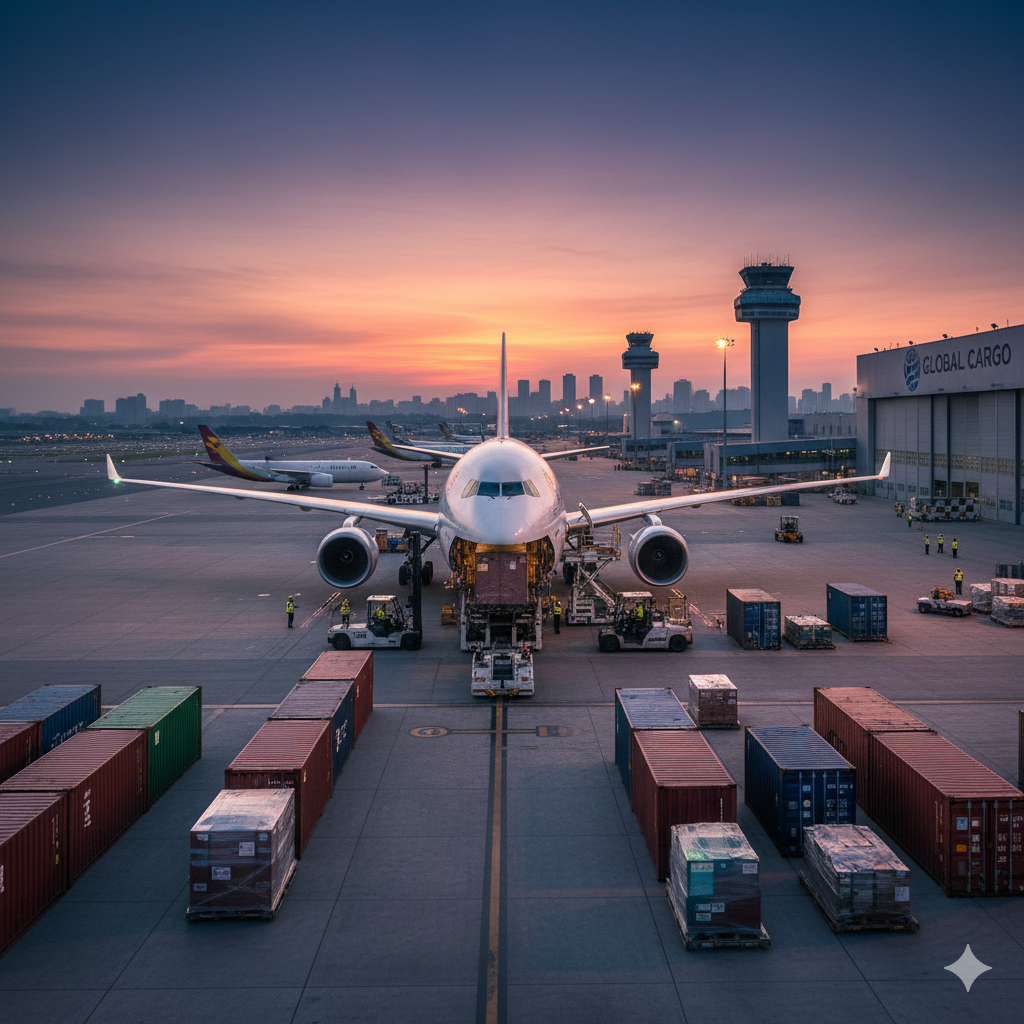
Challenge: Fragmented data from multiple systems leads to siloed information and no holistic view, hindering planning and real-time decision-making.
Solution: AI unifies fragmented data from ERP, TMS, carrier portals, IoT sensors, and customs declarations. It creates a single intelligent view of the supply chain, highlighting anomalies and insights beyond simple tracking. This includes SKU-level visibility across complex consolidations and insights into potential customs bottlenecks.

Challenge: Manual processes, constant chasing for updates, and human error are time-consuming and costly.
Solution: AI changes cost structures by automating decision-making and execution. It significantly reduces manual labour, minimises errors, and optimises resource utilisation (e.g., container space, truck mileage, warehouse capacity). AI can also automate repetitive tasks like documentation generation, data entry, and tracking updates, and free up teams to focus on complex edge cases.
AI is no longer a distant ambition for supply chains—it is already solving persistent challenges, from visibility gaps to rising costs. By shifting operations from reactive to predictive, it enables leaders to make smarter, faster, and more resilient decisions. The next step is not asking whether AI belongs in the supply chain, but how to deploy it at scale to turn disruption into competitive advantage.
An AI-ready supply chain is not built overnight. Research suggests that executing AI across your operations should start with experimentation. Although only 9% of companies use AI widely across their supply chains, leading organisations — the early adopters — are already realising disproportionate benefits, suggesting a staged test-and-scale approach is prudent.
There are a few areas to consider when strategising how best to implement AI-powered tools to empower your workforce:
Data security and privacy
Data ownership and control
Explainability and transparency
Reliability and accountability
Future-proofing and trust
Understanding the challenges and opportunities for supply chain leaders is the first step. The next is positioning AI as a driver of measurable return on investment — not as a technology experiment, but as a strategic enabler of resilience, efficiency, and profitability.

AI is no longer a buzzword. It’s a boardroom discussion point, with clear financial implications. In the supply chain, AI drives measurable value across three key areas:
Gartner research shows that top-performing supply chain organisations use AI and machine learning at roughly twice the rate of lower performers for critical processes like supply planning, logistics, and S&OP, illustrating that adoption directly correlates with operational outperformance. Below we explore how to identify tangible business benefits across the supply chain, and secure internal alignment for AI adoption.
Strategic benefit: Turning logistics into a competitive advantage.
AI empowers supply chain directors to position their operations as a profit centre, not a cost base. Predictive insights allow for scenario planning that prevents costly disruption, while automated network modelling supports long-term decisions about sourcing, routing, and capacity.
Strategic benefit: Enhancing executional visibility and efficiency.
Inbound teams can use AI to eliminate the blind spots that cause delays, demurrage, and manual admin. Automated ETA prediction, supplier updates, and CRD monitoring create a continuous flow of real-time insight, enabling proactive action before delays cascade.
Strategic benefit: Protecting product availability and speed-to-market.
AI ensures product readiness aligns with promotional calendars and demand peaks. By providing SKU-level visibility, it supports smarter decision-making around order allocation, supplier diversification, and inventory prioritisation.
Strategic benefit: Driving cost accuracy, cash flow control, and risk mitigation.
Finance teams gain full visibility into landed costs, in-transit inventory, and supplier performance data, improving forecasting and reducing accrual inaccuracies. Predictive cost modelling supports better budgeting and cash flow planning.
Across every role, the common thread is visibility. AI replaces assumptions with precision, enabling teams to anticipate disruption, reallocate resources dynamically, and drive continuous improvement. When positioned as a revenue enabler and cost stabiliser, AI earns its place as a strategic investment, not a technology expense.
Reliability is critical for supply chains operating at a global scale. AI strengthens precision by transforming raw data into proactive, validated intelligence.
Predictive ETAs become more accurate than carrier benchmarks, automated document processing eliminates human error, and unified SKU-level visibility empowers leaders to make confident, data-driven decisions.
Below, we explore how different teams in the supply chain can leverage AI to enhance precision and accuracy and articulate the business case internally.
Strategic benefit: Turning uncertainty into confidence through real-time accuracy.
AI enables Supply Chain Directors to forecast disruptions, anticipate risk, and allocate resources with precision. Predictive ETAs calibrated against live network data, as opposed to static carrier estimates, allow for proactive rerouting and scenario planning before delays materialise.

Strategic benefit: Creating operational precision through data-led execution.
Inbound teams rely on precision to synchronise bookings, supplier readiness, and transportation schedules. AI enhances this by automatically flagging deviations between supplier CRDs, carrier milestones, and expected delivery windows.
Strategic benefit: Safeguarding product availability with accurate visibility.
AI provides SKU-level precision, ensuring teams know exactly when and where products are in transit, and when they’ll be available for allocation, promotion, or launch. Automated data validation across supplier and carrier inputs reduces dependency on manual updates and fragmented spreadsheets.
Strategic benefit: Achieving financial accuracy through verified supply data.
AI validates cost and compliance data automatically, cross-referencing invoices, carrier contracts, and customs documentation. This reduces financial exposure caused by errors in landed-cost calculation, misclassification, or missing paperwork.
Precision is the foundation of profitability. By increasing the accuracy of ETAs, documentation, and inventory data, AI reduces waste, protects revenue, and enhances decision-making across all levels of the supply chain.
AI doesn’t just change what supply chains achieve. It transforms how they operate. By connecting fragmented data and automating routine work, AI creates more efficient teams, faster decisions, and smoother execution. It shifts organisations from reactive problem-solving to proactive, insight-led management, where exceptions are managed automatically, and focus moves to strategy, not chasing updates.
Below, we explore how each team realises tangible efficiency gains, and how to articulate the value to executive stakeholders.
Strategic benefit: Orchestrating end-to-end performance.
AI allows Supply Chain Directors to run complex, global networks. Teams are able to focus on high-risk and outlying scenarios, rather than being stuck in the weeds of manual, time-consuming tasks, by centralising data and automating decision-making. Predictive workflows help identify which shipments, routes, or suppliers require intervention — turning vast complexity into prioritised clarity.
Strategic benefit: Automating execution to eliminate wasted effort.
Inbound teams spend countless hours tracking updates, reconciling data, and chasing suppliers. AI automates these repetitive workflows, handling supplier follow-ups, documentation parsing, and milestone validation in real time.

Strategic benefit: Aligning logistics agility with commercial priorities.
AI ensures operational decisions support sales and merchandising goals by providing real-time insight into availability, delivery timelines, and supplier performance. Teams can reprioritise high-value SKUs instantly, reroute freight dynamically, and ensure campaign-critical stock is on time.
Strategic benefit: Streamlining financial operations and decision cycles.
Finance teams gain from the automation of documentation, invoice validation, and data reconciliation. AI’s ability to streamline and analyse complex datasets means fewer manual checks, faster reporting cycles, and greater accuracy in forecasting and accruals.
Efficiency is where AI delivers compounding value. By reducing friction, automating low-value tasks, and unifying data flows, AI gives every team more bandwidth to focus on strategy, growth, and collaboration.
The ROI of AI is not solely financial—it strengthens trust and long-term positioning. In the boardroom, AI should be considered not just as a cost-saver, but as a resilience tool, a way of delighting customers and strengthening relationships, and a method of bringing digital maturity across the organisation.
In fact, companies that have AI-led supply chain capabilities materially outperform peers; Accenture found these organisations deliver approximately 23% greater profitability versus peers. For business leaders, the message is clear: embedding AI is not a technology initiative, but a competitive advantage.
Integrating AI into your supply chain is as much about people and partnerships as it is about technology. Selecting the right partner can make the difference between incremental improvements and transformative change. For supply chain leaders, this means looking beyond feature sets to the broader capabilities, trustworthiness, and long-term alignment of your partners.
Here are a few examples of the areas you should consider when approaching an AI partnership:
A capable partner should demonstrate a track record of embedding AI into real-world supply chain operations. Look for evidence of measurable outcomes, such as customer testimonials and use cases, improved forecasting accuracy, reduced operational costs, or enhanced on-time performance. Ask how their AI models have been applied across multimodal logistics, demand planning, and exception management.
Zencargo AI is built on a digitally native, cloud-born infrastructure. This ensures a clean, structured, and instantly AI-ready data foundation, free from the constraints of legacy systems. This extensive, high-quality operational data, including years of SKU-level, multimodal shipment data, is crucial for powering accurate AI decisions. We work closely with customers to develop tried and tested AI-powered solutions and our platform is delivering measurable value to our customers every day.
“With visibility in the Zencargo platform, SLG has more reliability and confidence. This frees our team to predict outcomes and drive operational savings.” Devinder Chana, Director of Supply Chain, SLG
Your partner should treat data as a strategic asset. This includes rigorous standards for encryption, access control, and compliance with the GDPR and other relevant regulations. Equally important is transparency: AI outputs should be explainable, auditable, and traceable, allowing your teams to validate recommendations and understand the reasoning behind decisions.
At Zencargo, data confidentiality is ensured through encryption both in transit and at rest, with access tightly restricted to authorised personnel. Importantly, customer data is never used to train third-party Large Language Models such as those from OpenAI or Google, protecting privacy and control. Zencargo also operates in full compliance with GDPR, safeguarding sensitive supply chain data across jurisdictions.
Zencargo documents all prompts and system flows to provide full auditability and understanding and enforces a rigorous data governance framework and takes accountability for AI-driven errors to the same standard as human errors.
Supply chains rely on a variety of systems — ERP, TMS, WMS, and IoT sensors. The right partner will enable seamless integration across your existing infrastructure, supporting both current workflows and future automation. Flexibility also extends to scale: a partner should support your experimentation efforts and allow AI initiatives to grow without being locked into a rigid platform.
Zencargo endeavours to make all AI integrations compatible with existing systems. We work closely with our customers to understand their specific challenges and business objectives, and tailor our AI solutions to their needs. Workflows are also built to change as our AI initiatives scale, meaning processes evolve to be automated, requiring less human input.
AI is most effective when paired with human expertise. Your partner should design systems that allow for human oversight at critical decision points. This ensures that AI recommendations enhance strategic decisions rather than replace human judgment, and helps build trust with internal stakeholders and external partners alike.
Zencargo’s approach integrates human oversight at critical points. For instance, in our Document Parser solution, Luca Scan, every document undergoes meticulous human-in-the-loop verification, which not only ensures accuracy but also continuously trains and refines AI models.
Finally, your AI partner should share your vision for the supply chain — not just as an operational function but as a strategic lever. They should support capability-building, change management, and upskilling, enabling your teams to thrive alongside AI, rather than feeling displaced or overwhelmed.
The right supply chain partner acts as an enabler, guiding you through the complexities of AI adoption while ensuring that technology, people, and processes are aligned to deliver measurable, sustainable value.
Zencargo empowers supply chain professionals to focus on complex problem-solving and strategic thinking. The learning curve is designed to be gentle, with intuitive, user-friendly features integrated into the familiar Zencargo platform, supported by dedicated customer success teams.
Zencargo is actively spearheading the AI-driven digitisation of global trade, with AI deeply embedded across our platform to deliver tangible value. We’re a digital freight forwarder with an AI-powered platform that drives your global operations. Manage orders, shipments, and deliveries in one place; connect suppliers, carriers, and warehouses, track every SKU, and turn data into decisions that protect margins and service. Built into the Zencargo platform, Luca is the intelligence layer that connects your data, systems, and partners.
Here’s how Luca is solving four key supply chain challenges:
Luca Scout – Purchase Order (PO) Confirmed Ready Date (CRD) Management
Luca Scout automates the critical, often manual process of monitoring PO conditions and following up with suppliers. Luca Scout identifies which PO’s have upcoming CRDs, automatically sends reminder emails to suppliers in their native language, processes responses using Natural Language Processing (NLP), and triggers platform updates or escalations. By providing CRD updates days in advance (depending on a customer’s specific CRD ranges), Luca Scout not only delivers earlier visibility but also reduces manual errors, streamlines supplier engagement, avoids costly delays, enables real-time supplier performance tracking, and supports more accurate inbound planning and inventory management.
Luca Flow – Drayage Booking
Luca Flow automates complex steps in the drayage process, including booking and communications. Acting as an extra colleague on your operations team, Luca Flow handles routine tasks so your people can focus on exceptions and higher impact work.
By dynamically orchestrating routes and carrier selection — including factors like load size, capacity, sustainability, risk, and reliability — Luca Flow not only optimises cost allocation but boosts efficiency, reduces manual effort and errors, and enhances operational control with greater predictability.
Ask Luca – Analytics and strategic insights
You have questions – Luca has answers. Ask Luca transforms fragmented freight data into actionable intelligence, providing real-time visibility into shipments. Ask any supply chain question in plain English and instantly receive data-backed responses, such as ETAs, SKU-level visibility, and recommendations.
Ask Luca aggregates and unifies data from multiple systems, acting as a single source of truth. The solution identifies trends, anticipates disruptions, and proactively flags shipments at risk of delay. No more hunting for answers to last minute, urgent questions – this is supply chain insight at your finger tips.
Luca Scan – AI-powered document parsing
Luca Scan transforms fragmented freight data into actionable insights by automating complex document processing. It applies AI and Large Language Models (LLMs) alongside Optical Character Recognition (OCR) to extract key information from documents and emails, automatically updating the Zencargo platform. A human-in-the-loop verification process ensures accuracy and continuously trains the models.
The supply chain has always been a story of adaptation. Each disruption—whether a closure, new tariff, or missed cargo date—forces leaders to reassess resilience, efficiency, and foresight. AI represents the next chapter: a set of capabilities that can transform logistics from a cost centre into a competitive advantage.
Its real power is helping organisations operate with precision in uncertainty, build resilience without adding cost, and free teams to focus on strategy instead of constant firefighting. For leaders, the challenge is twofold: position AI as a driver of measurable ROI in the boardroom, and champion it across the organisation as a catalyst for cultural change.
The call to action is clear: experiment quickly, build on high-quality data, embed explainability and governance, and empower your people to thrive alongside AI. Companies that act decisively today won’t just survive disruption—they’ll use it to fuel growth and set the pace for tomorrow.
To learn more about Zencargo’s AI powered platform, click here.
AI in supply chain management refers to the use of artificial intelligence technologies — such as machine learning, natural language processing, and predictive analytics — to automate tasks, improve visibility, and enable smarter decision-making across logistics, sourcing, and fulfillment. It helps businesses anticipate disruption, optimise routes, and cut costs through data-driven precision.
At Zencargo, AI is built directly into our digital freight forwarding platform through Luca, your AI-powered supply chain co-pilot. Luca connects data, automates manual workflows, and provides predictive insights that help logistics teams plan proactively and execute with confidence.
AI is transforming global logistics by replacing manual, reactive processes with predictive, automated intelligence. It analyses data from carriers, ports, suppliers, and external factors — like weather, tariffs, and congestion — to forecast delays, optimise shipment planning, and manage capacity more efficiently. The result is faster, more resilient, and more sustainable supply chains.
At Zencargo, we’ve embedded AI directly into our logistics platform through Luca, our supply chain co-pilot. Luca unifies global trade data, predicts risks before they happen, and automates supplier and carrier updates — helping businesses move goods with greater precision, visibility, and control.
Key benefits include:
– Greater visibility across every shipment and supplier
– Reduced manual effort through automation
– Improved ETA accuracy and demand forecasting
– Cost savings from smarter routing and consolidation
– Enhanced collaboration across teams and partners
AI unifies fragmented data from ERP, TMS, documents, emails, and carrier systems into one intelligent single source of truth – with Zencargo, this is our AI-powered platform, enhanced by Luca. AI tracks shipments, supplier updates, and exceptions in real time, giving teams a complete picture from purchase order to delivery. This transparency enables faster decisions and fewer surprises across the supply chain.
AI reduces logistics costs by identifying inefficiencies before they happen — for example, detecting underutilised container space, automating supplier follow-ups, and preventing costly demurrage or detention. It allows teams to optimise routes, consolidate shipments, and make proactive, cost-aware choices. We deliver global freight forwarding across ocean, air, road, and rail, powered by AI and Luca, your supply chain co-pilot. By combining expert operations with predictive intelligence, we turn complexity into clarity — giving businesses the precision, speed, and foresight to make better decisions at every level, from boardroom strategy to daily execution.
In freight forwarding, AI acts as a digital co-pilot that automates routine processes like booking, tracking, and documentation while surfacing predictive insights. It bridges data from multiple systems and simplifies communication between suppliers, carriers, and customers, enabling forwarders to deliver greater speed, accuracy, and control.
Zencargo combines AI innovation with hands-on freight expertise. Our platform integrates predictive intelligence directly into supply chain workflows — not just as standalone tools. Each Luca capability automates a different challenge, from supplier communication to document parsing, ensuring teams have real-time insight and fewer manual touchpoints.
No — AI is designed to empower, not replace, human expertise. It automates repetitive tasks and provides decision support so teams can focus on strategy, supplier management, and customer relationships. Zencargo’s “human-in-the-loop” design ensures people remain in control at key decision points.
Data security is fundamental. All Zencargo AI systems comply with GDPR and use encryption both in transit and at rest.
The best approach is to start in low-risk areas: identify one high-impact process (like supplier communication, document processing, or ETA prediction) and deploy AI to automate it. From there, scale incrementally. Zencargo partners with customers to identify these opportunities and deliver measurable results fast.

For UK retail brands, international expansion has moved from long-term ambition...
The blockade of the Strait of Hormuz has exposed the critical vulnerability of...
Zencargo platform newsletter. Explore our latest AI innovations and updates.