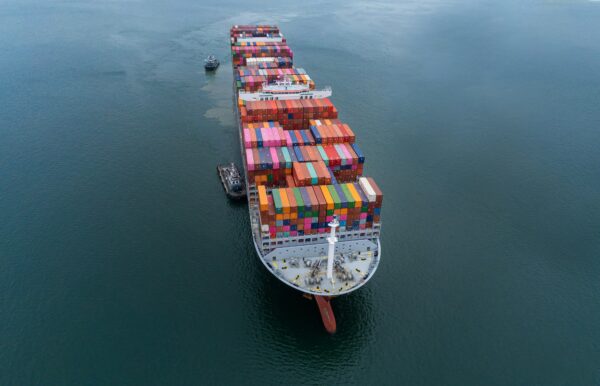
In Focus: Peak season arrives early

The global shipping market continues to face major volatility, caused by a mix of geopolitical conflicts and a significant surge in demand.

The ongoing blockade in the Strait of Hormuz and continued rerouting around Africa due to the Red Sea crisis are putting a heavy strain on shipping networks. Concurrently, an unusually early summer peak has caused demand to surge across major outbound routes from the Far East. On the Transpacific, this spike is largely driven by shippers rushing to move cargo ahead of impending July tariffs; on the Asia-Europe lane, the surge is fuelled instead by shippers proactively bringing their peak season shipments forward. Across both lanes, volume is significantly outpacing available capacity, leaving vessels booked between three to six weeks in advance. 

Operationally, day-to-day challenges are being heavily compounded by growing global trade imbalances and a structural slowdown in empty container repatriation. Consequently, the movement of empty containers now accounts for 30% of all global transportation (measured in TEU*Miles)—meaning one in every three containers shipped today is empty, versus one in four prior to the COVID-19 pandemic.

Ocean
  • Demand continues to run ahead of market capacity, causing a combination of cargo rollings and rate increases heading into the summer peak season.
  • Following Q1 losses, some carriers are utilising the early peak season to recover from earlier financial underperformance.
  • Rate hikes have been pushed forward across both the short-term and long-term markets, driving a substantial percentage increase in the SCFI over the last four weeks.
  • June rates have climbed further compared to the second half of May, with additional upward adjustments anticipated for the latter half of the month.
  • Peak Season Surcharges (PSS) have been announced and implemented for June by major lines.
  • Emergency Bunker surcharges (EBS) remain in place on long-term contracts; many carriers are choosing to bundle the EBS directly into normal bunker or standard FAK rates.
  • Vessel space is heavily constrained, with ships completely full three to six weeks in advance.
  • Space is effectively blocked out until the end of June. Some lines are tightly restricting allocations by only releasing space two weeks prior to the estimated time of departure (ETD) to protect yields, while other carriers are executing last-minute booking cancellations to manage overall capacity.
  • Limited space remains accessible on specific FAK contracts, though this is still scarce due to the massive backlog of cargo in the market.
Air

Central China (SHA/NGB)

  • SHA: Shippers are advised to check rates on a case-by-case basis.
  • NGB: The market to Germany is increasing and continuing an upward trajectory, causing space to become exceptionally tight. All rates must be verified on a case-by-case basis.

North China (DLC/TSN/TAO/PEK)

  • TSN: The market remains tight, with rates holding stable at a higher level. Space and rates must be confirmed case by case using exact cargo details.
  • DLC/PEK: Space is tight across all carriers, requiring case-by-case verification. Spot rates are available for dense cargo, but volume cargo requires six to seven days of advance booking and acceptance of flight splits.
  • TAO: The market to European hubs is holding stable, though space remains slightly tight. Overall air freight operations are currently normal.

South China (CAN/SZX/XMN)

  • CAN: The market has trended upward this week. Shippers should check for spot rates on a case-by-case basis according to actual flight dates.
  • SZX: The market is steady, with all shipments and deferred services to main European airports requiring case-by-case carrier confirmation.
  • XMN: Shippers are requested to check pricing case by case, with final rates dependent on specific cargo details.
Ocean
  • Demand is continuously increasing, experiencing a surge during the first half of June.
  • Overall capacity has increased, recovering to around 90% of normal levels out of China.
  • Despite this recovery, a combination of prior blank sailings and the massive surge in demand means that securing space remains exceptionally difficult across all lanes to the US.
  • This capacity crunch is prompting carriers to restrict NAC bookings, pushing a larger portion of volume onto FAK and premium services.
  • Blank sailings are expected to rise during the first two to three weeks of June before beginning to ease, which is further exacerbating the space issues across the trade.
  • Shippers are strongly advised to plan proactively, with a recommended lead time of three to four weeks to secure bookings.
  • The FAK market is seeing significant, broad-based increases across all Transpacific lanes starting from the beginning of June, with carriers confirming their updated rate structures very late.
  • Finalised June rates are confirmed at a substantially higher level than those seen in May.
  • The Emergency Fuel Surcharge (EFS) remains in effect and has been adjusted upward from May levels.
  • All carriers are implementing a Peak Season Surcharge (PSS) in June across all NAC contracts, which becomes applicable on long-term deals from 8 June, with some lines already considering an additional PSS increase from 15 June.
Air

Central China (SHA/NGB)

  • SHA: High fuel prices remain the dominant factor dictating freight rates. Major airlines have trimmed schedules due to fuel cost pressures, leading to tight capacity and keeping weekly rates at a high level. There is no sign of airlines reducing rates; conversely, prices may rise further.
  • Space for lower-priced options is severely limited, with availability concentrated at higher price tiers.
  • Rates to the US East Coast are tracking higher than West Coast routes, with no rate reductions anticipated in the coming weeks as the market remains tied to oil prices.

North China (DLC/TSN/TAO/PEK)

  • TSN: The market is holding stable this week, with freighter options offering the earliest departure space and relatively better rates to US West Coast destinations (LAX/SFO/SEA). Booking requires six to seven days of advance notice, and cargo details must be provided for case-by-case checks.
  • DLC/PEK: The market remains tight but stable. Spot rates can be secured for dense cargo, while volume cargo requires advance notice and flight splits. All space and rates must be checked case by case.
  • TAO: The market is busy, with tight space reported to both the US West and East coasts. Airlines are still releasing spot rates for dense cargo, but all shipments must be checked case by case.

South China (CAN/SZX/XMN)

  • CAN: Flight space is tight, though overall market operations are normal. Spot pricing must be checked case by case based on actual flight dates.
  • SZX: Market demand is steady. All shipments should be checked with carriers case by case, particularly for deferred services into major hubs like LAX, SFO, and JFK.
  • XMN: Due to the Middle East conflict, downward pressure on capacity has driven transport costs up for US West Coast base ports. Pricing continues to be quoted strictly on a case-by-case basis.
Ocean
  • ISC FAK rates originating from India are seeing slight decreases across the majority of ports. Rates from North West India to North Europe are holding at a mid-low level compared to previous weeks.
  • FAK rates from Chittagong heading into June are experiencing a mix of increases and contract extensions, keeping the market to North Europe at a mid-low level overall.
  • The ongoing Middle East situation is routing additional cargo volume toward ISC ports, causing broader operational congestion, elevated yard density, and erratic vessel scheduling across the region.
  • Port operations in Mundra are experiencing an average vessel waiting time of four days, whilst Nhava Sheva continues to suffer from high terminal dwell times and persistent yard density.
  • A significant surge in volume has been reported at Karachi due to cargo rerouting from the Middle East, and Colombo is experiencing increased transhipment volumes and elevated vessel activity.
  • Schedule reliability on the Indian Subcontinent to Europe trade lane saw a slight improvement, increasing by 0.7 percentage points month-on-month in March and April 2026 to reach 52.3%.
    • Hapag-Lloyd and Maersk emerged as the top-performing carriers on this trade lane with a reliability rating of 66.3%, closely followed by MSC at 65.6%.
    • Specific services maintaining strong on-time reliability include the MSC Britannia at 75%, the MSC NWC to IPAK at 70.40%, and the MSC/CMA Australia Express at 68.40%.
Ocean
  • Rates remain highly elevated, driven by a sharp reduction in capacity and the implementation of the Emergency Fuel Surcharge, which was applied later here than on other trades due to FMC regulations.
  • Capacity is down both annually and compared to the previous month. Over the past 12 months, 12 out of 50 transatlantic services have been completely cut from the trade. Trade statistics show North Europe capacity is down 9.8% year-on-year and 3% versus last month on the North Europe to North America trade.
  • All carriers are reporting space restrictions, with vessels full out of Europe: early bookings are essential to secure space. Carriers are maintaining tight control over space through blank sailings and vessel redeployments, which currently account for approximately 17% of capacity.
  • Schedule reliability is showing signs of improvement, rising 13.6% compared to the previous month to bring overall trade reliability up to 60%.
  • ICL performed as the most reliable carrier on the trade lane during March/April 2026 with a perfect schedule reliability of 100.0%, followed by ACL at 78.1%.
  • Maersk, MSC, Hapag-Lloyd, and Evergreen all achieved reliability scores above 60%, while other carriers performed in the 40% to 50% range.
  • Some European ports continue to face operational issues. UK ports are still working through the IT issues at Southampton that began in May, while Rotterdam and Antwerp are experiencing crunches because the early onset of the Asia-Europe peak is backing up transatlantic feeder space.
Benelux

Antwerp

  • PSA 913: Yard utilisation is elevated at 80% to 85%, with reefer utilisation at 65% to 70%.
  • PSA 869: Yard utilisation stands at a level of 65% to 70%, with reefer on normal utilisation of 50% to 55%.
  • AGW: Yard utilisation has remained increased at 65% to 70%, with reefer utilisation reducing to 60% to 65%.
  • AGW (Empties & Cargo): Empties are fluctuating between 55% and 80%, and cargo opening times are now set to 6 days prior to vessel ETA.

Rotterdam

  • ECT: The yard is on an elevated level of 75% to 80% utilisation.
  • RWG: Yard utilisation has remained on a critical level of 80% to 85% utilisation.
  • DELTA II: The yard is on a low level of 40% to 45% utilisation, with reefers at a level of 30% to 35%.
  • APMT MVII: The yard is currently at a higher level of 90% to 95% utilisation.
USA
  • LA/LB: 1 vessel waiting, with a 6-day dwell on the rail terminals.
  • Oakland: 2 vessels waiting, with a 6-day rail dwell.
  • Seattle and Tacoma: 0 vessels waiting, with a 5-day dwell on rail.
  • Vancouver (Canada): 6 vessels waiting, with a 6-day dwell on rail.
  • NY/NJ: 3 vessels waiting, with a 3-day dwell on the rail.
  • Savannah: 9 vessels waiting, with a 2-day dwell on the rail.


Europe Public Holidays

We anticipate a shortage of availability and the occurrence of delays around the bank holiday periods. Plan ahead and allow extra time for your products to be delivered.

We anticipate a shortage of availability and the occurrence of delays around the bank holiday periods. Plan ahead and allow extra time for your products to be delivered.

  • 4 June (Thu): Austria, Croatia, Germany*, Liechtenstein, Monaco, Poland, Portugal, San Marino, Spain*, Switzerland*.
  • 5 June (Fri): Denmark*, Faroe Islands*, Isle of Man.
  • 6 June (Sat): Sweden.
  • 7 June (Sun): Lithuania, Malta.
  • 9 June (Tue): Spain*, Spain*, Åland (Ahvenanmaa).
  • 10 June (Wed): Portugal.
  • 12 June (Fri): Russia.
  • 13 June (Sat): Portugal*, Russia, Spain*.
  • 14 June (Sun): Russia.
  • 15 June (Mon): Gibraltar, UK (United Kingdom)*.
  • 17 June (Wed): Iceland.
  • 19 June (Fri): Finland*, Sweden*, Åland (Ahvenanmaa)*.
  • 20 June (Sat): Finland, Sweden, Åland (Ahvenanmaa).
  • 21 June (Sun): Greenland (Kalaallit Nunaat)*.
  • 22 June (Mon): Croatia, Estonia*, Latvia.
  • 23 June (Tue): Estonia, Latvia, Luxembourg, Switzerland*.
  • 24 June (Wed): Andorra*, Estonia, Latvia, Lithuania, Spain*.
  • 25 June (Thu): Slovenia.
  • 28 June (Sun): Bosnia and Herzegovina (FBiH)*, Ukraine.
  • 29 June (Mon): Holy See (Vatican City), Italy*, Malta, Switzerland*, Ukraine.
Traffic bans

02.06.26

  • AT | Austria 00:00 – 05:00; 22:00 – 24:00
  • AT | Austria 09:00 – 22:00
  • CH | Switzerland 00:00 – 05:00; 22:00 – 24:00
  • IT | Italy 07:00 – 22:00
  • LI | Liechtenstein 00:00 – 05:00; 22:00 – 24:00

03.06.26

  • AT | Austria 00:00 – 05:00; 22:00 – 24:00
  • AT | Austria 07:00 – 22:00
  • HR | Croatia 15:00 – 23:00
  • LU | Luxembourg 23:30 – 24:00
  • PL | Poland 18:00 – 22:00
  • CH | Switzerland 00:00 – 05:00; 22:00 – 24:00
  • LI | Liechtenstein 00:00 – 05:00; 22:00 – 24:00

04.06.26

  • AT | Austria 00:00 – 22:00
  • AT | Austria 22:00 – 24:00
  • HR | Croatia 14:00 – 23:00
  • DE | Germany 00:00 – 22:00
  • LU | Luxembourg 00:00 – 21:45
  • PL | Poland 08:00 – 22:00
  • CH | Switzerland 00:00 – 05:00; 22:00 – 24:00
  • LI | Liechtenstein 00:00 – 24:00

05.06.26

  • AT | Austria 00:00 – 05:00; 22:00 – 24:00
  • CH | Switzerland 00:00 – 05:00; 22:00 – 24:00
  • LI | Liechtenstein 00:00 – 05:00; 22:00 – 24:00

06.06.26

  • AT | Austria 00:00 – 05:00; 22:00 – 24:00
  • AT | Austria 07:00 – 15:00
  • AT | Austria 15:00 – 24:00
  • FR | France 22:00 – 24:00
  • HU | Hungary 22:00 – 24:00
  • LU | Luxembourg 21:30 – 24:00
  • LU | Luxembourg 23:30 – 24:00
  • CH | Switzerland 00:00 – 05:00; 22:00 – 24:00
  • LI | Liechtenstein 00:00 – 05:00; 22:00 – 24:00

The route ahead

The information that is available in the Zencargo Market Update comes from a variety of online sources, partners and our own teams. Click below to learn more about how Zencargo can help make your supply chain your competitive advantage.

Get In Touch

Event