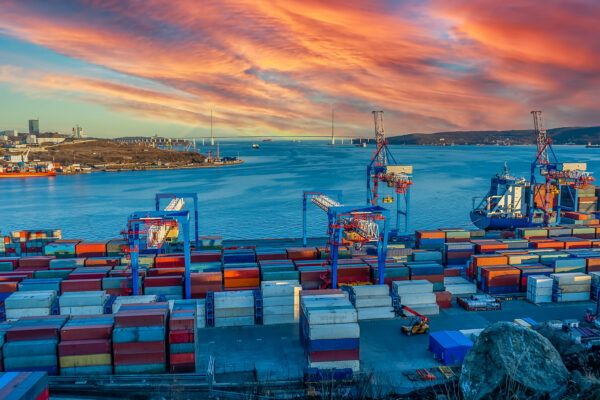
In Focus: Record orders meet record-tight capacity

The container orderbook-to-fleet ratio has surged to 45%, a post-2009 high, after Maersk confirmed a 26-ship order for 18,600 TEU  vessels. CMA CGM has also added 12 x 24,000 TEU vessels. Total orders now stand at 1,925 ships for 15.6m TEU, more than double the post-COVID peak of 7.6m TEU in August 2023.

The building spree comes as the current fleet remains stretched thin: idle capacity sits at just 0.7% (source: Alphaliner) of the global fleet, and port congestion is keeping effective supply tight, even as new tonnage floods the orderbook.

That squeeze is showing up unevenly across trades, with Transpacific capacity remaining tight while Asia-Europe eases as Gemini and CMA CGM add more westbound Suez capacity back into the network.

With deliveries not landing until 2029–2030, shippers face a prolonged multi-year period of tight capacity before that new tonnage arrives.

Ocean
  • First-half October rates are currently an extension of the final revisions made at the end of September. September saw overall rate declines from the start to the end of the month, and October rates are continuing to reflect this lower pricing level.
  • Emergency Bunker Surcharge (EBS) levels from carriers are increasing as of October in line with the VLFSO increases.
  • With two weeks to go until the Golden Week holiday, there is very little rebound in cargo volumes.
  • Space remains under carrier control on Named Account Contracts and Long Term agreements. Full allocations are still not being released but space continues to improve. FAK space generally remains available 7 to 10 days in advance.
  • Severe schedule disruptions continue due to ongoing port congestion.
  • Blank sailings have not been executed prior to Golden Week due to these congestion issues. As a result, capacity availability is actually much higher than usual due to vessel bunching.
  • Some services from the Gemini Cooperation are now fully utilising the Suez Canal westbound, alongside the OCR service from CMA. MSC currently only operates eastbound services through the canal with no westbound transits, and Premier Alliance currently has no services on the route.
Air

Central China

  • SHA: Export rates need to be quoted individually.
  • NGB: Air freight rates have increased slightly. Shippers must check rates with the team, as pricing is currently being quoted on a case-by-case basis.

North China

  • TSN: The market is a little tight ahead of the holidays, and rates continue to increase. SQ and JL offer comparatively lower rates with longer transit times, requiring 4 to 5 days of advance booking. KE and OZ provide earlier departure times but are keeping rates at a higher level, also requiring 4 to 5 days to book. Space and rates must always be checked case by case.
  • DLC/PEK: Rates across most airlines continue to increase before the holidays and maintain a high level. Dense cargo can apply for spot rates. Volume cargo requires a booking window of 6 to 7 days in advance and the acceptance of flight splits. Space and rates must always be verified case by case.
  • TAO: The market to the EU is stable this week, with space remaining open and not very tight to most EU airports. Air freight rates to main airports have decreased slightly this week. Airlines are still releasing spot rates for dense and volume cargo, but space and pricing must be checked case by case.

South China (CAN/SZX/XMN)

  • CAN: The market is expected to move into peak season shortly. Shippers must check spot rates case by case depending on actual flight dates.
  • SZX: The market is trending upward and air freight rates have increased. All shipments must be checked with carriers case by case, and the team will quote rates individually.
  • XMN: Rates are expected to remain roughly the same this week. Shippers must check rates case by case so the team can work to secure better pricing based on actual cargo details.
Ocean
  • FAK rates for the second half of September continue to increase across the trade, driven by stable demand, full vessel capacity, disruptions in China, and Panama Canal restrictions.
  • Rate increases are more pronounced for East Coast routings, with major carriers setting similarly elevated pricing baselines.
  • Peak Season Surcharges (PSS) on Named Account Contracts (NAC) will continue throughout September, alongside Panama Canal Surcharges which are being applied to NAC rates as a separate fee.
  • Overall capacity remains critical and space is very limited, as the front-loading of cargo for Golden Week and previous tariff exemptions have drained available capacity to the US.
  • Carriers are deploying at full capacity throughout September, but blank sailings are expected to worsen ahead of the Golden Week window.
  • Port congestion remains a major issue in China, with elevated vessel delays in Shanghai and Ningbo causing significant schedule volatility.
  • Despite improved rainfall, Panama Canal restrictions remain in place with daily transit slots capped at 34 vessels per day. To mitigate these canal restrictions, volume is increasingly being shifted from all-water routings to inland rail options across the country.
  • This shift to rail is driving up dwell times at all main rail ramps, with pressure already evident at Los Angeles and Long Beach terminals.
Air

Central China

  • SHA: The arrival of the traditional peak season has prompted airlines to significantly increase transportation costs, even though the export tonnage of goods has not increased as much as expected. Market prices have slightly increased compared to last week.
  • Due to high oil prices, transportation costs remain at a very high level compared to the same period in previous years. Oil prices continue to be the primary factor determining freight rates; based on current fuel prices and peak season demand, rates are expected to continue rising. Available space is largely restricted to higher price tiers.
  • Similar to the US West Coast, market rates to the US East Coast and Midwest have also slightly increased this week.
  • NGB: All rates must be checked and quoted on a case-by-case basis.

North China

  • TSN: The market is normal and rates are holding stable this week. JL freighter flights are offering better rates to LAX, SFO, and SEA, requiring 6 to 7 days of advance booking. KE and OZ rates are keeping at a higher level overall. Space and pricing must always be checked case by case.
  • DLC/PEK: Rates across most airlines have increased this week and are holding at a higher level. Dense cargo can apply for spot rates. Volume cargo requires a booking window of 6 to 7 days in advance and the acceptance of flight splits. Space and rates must always be verified case by case.
  • TAO: The market is holding stable this week with space reported as not very tight to both the US West and East coasts. Rates to both the US West Coast and US East Coast have decreased slightly this week. Airlines continue to release spot rates for dense and volume cargo, but case-by-case checks are required for all shipments.

South China

  • CAN: The market is expected to move into peak season shortly. Shippers must check with the team for spot rates on a case-by-case basis according to actual flight dates.
  • SZX: The market has become hot, requiring all shipments to be checked with carriers case by case. All rates are being quoted individually.
  • XMN: Air rates will increase from this week as the Mid-Autumn Festival and National Holiday approach. Shippers are requested to check rates case by case, and all rates are being quoted individually.
Ocean
  • FAK rates from India are continuing to ease following the late summer peak, despite persistent structural issues in the market. FAK rates from Bangladesh (Chittagong) have stabilised and are showing little movement, though they remain at elevated peak levels.
  • FAK space from India remains broadly acceptable, though empty container shortages persist across certain carriers.

Operational disruptions & congestion

  • Mundra: Empty container yard strikes lasting 13 days concluded on 10 September. An estimated 5,000 containers per day were held up, resulting in missed vessel cut-offs, cargo rollovers, and additional costs.
  • Nhava Sheva: Congestion persists due to seasonal monsoon weather and regional service disruptions. Yard density remains high at over 90%, leading to extended vessel waiting times and container shortages.
  • Karachi: The two main terminals, KICT and SAPT, are under sustained volume pressure. Vessel calls have increased by 14.3% year-on-year, driven largely by the ongoing conflict in the Middle East.
  • Chittagong: The port is experiencing slight disruptions, with yard occupancy running well above the recommended threshold of roughly 60%.
  • Colombo: Severe ongoing congestion continues. As of early September, yard utilisation had reached approximately 130% of capacity, with ships waiting an average of 3 to 4 days outside the harbour.
  • The Gemini Cooperation will route its IEX service (with Ports of Loading at Ennore and Colombo) via the Suez Canal, which is expected to reduce transit times and free up vessel capacity. The MSC Himalayan Express service from the Indian Subcontinent to the Mediterranean is already routing both legs through the Suez Canal.
  • Certain carriers are routing more capacity through the Bab-el-Mandeb Strait, despite reports that Houthi forces have tightened their grip on the surrounding coastline.
Ocean
  • Rates for Transatlantic routes from North Europe to the US East Coast are stable through the end of September, but are expected to remain high into October following significant upward FAK rate revisions announced by MSC for routes from Antwerp to New York and Houston.
  • Carriers are actively balancing capacity and demand to support pricing, maintaining a 6% to 9% cancellation rate on Transatlantic Westbound routes and demonstrating continued discipline across all East-West trades with a 6% overall blank sailing rate between early September and mid-October.
  • Maersk will introduce a winter blank sailing programme on its Canada Atlantic Express service starting in October, cancelling one sailing every five weeks.
  • Transatlantic schedule reliability is slightly improving, led by ICL and Maersk, even as global schedule reliability dropped for a third consecutive month in August to 29.4%, with average vessel delays now reaching 17 days.
  • European ports face ongoing pressure, with yards at Rotterdam, Hamburg, and Bremerhaven running at 88% to 90% capacity, causing berthing delays of 32 to 44 hours. German ports are still experiencing two to 3 days of delays as they clear recent strike backlogs.
  • US port congestion remains stable, and the New York City chassis shortage continues to show signs of improvement.
  • In Canada, Montreal is currently the most stable East Coast option and should be prioritised over Saint John or Halifax. Routings via Prince Rupert or Vancouver to the US Midwest face delays exceeding two weeks, requiring a 10 to 14-day buffer for any Canadian rail moves.
Benelux

Ocean

  • Antwerp PSA 913: Yard utilisation is at 75% to 80%, with reefer utilisation at 75% to 80%.
  • Antwerp PSA 869: Yard utilisation stands at 60% to 65%, with reefer utilisation at 50% to 55%.
  • Antwerp AGW: Yard utilisation has normalised to between 70% and 75%, with reefer utilisation at 70% to 75%.

Netherlands

  • Rotterdam ECT: Yard utilisation is at an elevated level of 80% to 85%.
  • Rotterdam RWG: Yard utilisation remains at a critical level of 80% to 85%.
  • Rotterdam Delta II: Yard utilisation is at a low level of 35% to 40%, with reefers at 30% to 35%.
  • Rotterdam APMT MVII: Yard utilisation is at a higher level of 85% to 90%.
USA

Ocean

  • Los Angeles/Long Beach: 0 waiting to berth (down by 1), though rail dwell remains elevated at 8 days.
  • Oakland: 3 vessels waiting, with a 6-day average rail dwell.
  • Seattle/Tacoma: No vessels currently waiting (no change), rail dwell sits at 5 days.
  • Vancouver (Canada): 3 vessels waiting (up by 1), with a 5-day rail dwell.
  • New York/New Jersey: 1 vessel waiting (up by 1), with a 3-day dwell on the rail.
  • Savannah: 1 vessel waiting (down by 5), with a 4-day dwell on the rail
Traffic bans

22.09.26

  • AT | Austria 00:00 – 05:00; 22:00 – 24:00
  • BG | Bulgaria 12:00 – 20:00
  • CH | Switzerland 00:00 – 05:00; 22:00 – 24:00
  • LI | Liechtenstein 00:00 – 05:00; 22:00 – 24:00

23.09.26

  • AT | Austria 00:00 – 05:00; 22:00 – 24:00
  • CH | Switzerland 00:00 – 05:00; 22:00 – 24:00
  • LI | Liechtenstein 00:00 – 05:00; 22:00 – 24:00

24.09.26

  • AT | Austria 00:00 – 05:00; 22:00 – 24:00
  • CH | Switzerland 00:00 – 05:00; 22:00 – 24:00
  • LI | Liechtenstein 00:00 – 05:00; 22:00 – 24:00

25.09.26

  • AT | Austria 00:00 – 05:00; 22:00 – 24:00
  • CH | Switzerland 00:00 – 05:00; 22:00 – 24:00
  • LI | Liechtenstein 00:00 – 05:00; 22:00 – 24:00

26.09.26

  • AT | Austria 07:00 – 15:00
  • AT | Austria 15:00 – 24:00
  • AT | Austria 00:00 – 05:00; 22:00 – 24:00
  • FR | France 22:00 – 24:00
  • LU | Luxembourg 21:30 – 24:00
  • LU | Luxembourg 23:30 – 24:00
  • CH | Switzerland 00:00 – 05:00; 22:00 – 24:00
  • HU | Hungary 22:00 – 24:00
  • IT | Italy 07:00 – 15:00
  • LI | Liechtenstein 00:00 – 05:00; 22:00 – 24:00

Europe Public Holidays

We anticipate a shortage of availability and the occurrence of delays around the bank holiday periods. Plan ahead and allow extra time for your products to be delivered.

September 2026

  • 22 September (Tue): Bulgaria, Switzerland*
  • 24 September (Thu): Austria*
  • 25 September (Fri): Switzerland*
  • 27 September (Sun): Belgium*
  • 28 September (Mon): Czech Republic

October 2026

  • 1 October (Thu): Cyprus, San Marino
  • 3 October (Sat): Germany
  • 4 October (Sun): Italy
  • 5 October (Mon): Portugal
  • 9 October (Fri): Spain*
  • 10 October (Sat): Austria*
  • 11 October (Sun): Macedonia
  • 12 October (Mon): Macedonia, Spain
  • 14 October (Wed): Moldova*
  • 23 October (Fri): Hungary, Macedonia
  • 26 October (Mon): Austria, Ireland (Eire)
  • 28 October (Wed): Cyprus, Czech Republic, Greece, Türkiye*
  • 29 October (Thu): North Cyprus, Türkiye
  • 31 October (Sat): Finland, Germany*, Slovenia, Sweden, Åland (Ahvenanmaa)

November 2026

  • 1 November (Sun): Andorra, Austria, Belgium, Bosnia and Herzegovina (FBiH), Croatia, France, Germany, Holy See (Vatican City), Hungary, Italy, Liechtenstein, Lithuania, Luxembourg, Monaco, Poland, Portugal, San Marino, Slovakia, Slovenia, Spain, Switzerland*
  • 2 November (Mon): Belgium*, Holy See (Vatican City), Lithuania, Monaco, San Marino, Spain

  • 4 November (Wed): Russia
  • 7 November (Sat): Belarus, Transdniestria (PMR)
  • 9 November (Mon): Spain*, Transdniestria (PMR)
  • 11 November (Wed): Austria*, Belgium, France, Poland, Serbia
  • 13 November (Fri): Montenegro, Saint Helena
  • 14 November (Sat): Montenegro
  • 15 November (Sun): Austria*, Belgium*, Belgium*, North Cyprus
  • 17 November (Tue): Czech Republic
  • 18 November (Wed): Croatia, Germany*, Latvia
  • 19 November (Thu): Monaco
  • 21 November (Sat): Bosnia and Herzegovina (FBiH)*
  • 22 November (Sun): Albania
  • 23 November (Mon): Albania
  • 25 November (Wed): Bosnia and Herzegovina (FBiH)*
  • 28 November (Sat): Albania
  • 29 November (Sun): Albania
  • 30 November (Mon): Albania, Romania

December 2026

  • 1 December (Tue): Albania, Portugal, Romania
  • 3 December (Thu): Spain*
  • 6 December (Sun): Finland, Spain, Åland (Ahvenanmaa)
  • 7 December (Mon): Spain*
  • 8 December (Tue): Albania, Andorra, Austria, Holy See (Vatican City), Italy, Liechtenstein, Macedonia, Malta, Monaco, Portugal, San Marino, Spain, Switzerland*
  • 13 December (Sun): Malta
  • 15 December (Tue): Guernsey and Alderney*
  • 23 December (Wed): Estonia*
  • 24 December (Thu): Andorra*, Austria*, Bulgaria, Czech Republic, Denmark*, Estonia, Faroe Islands, Finland*, Germany*, Greenland (Kalaallit Nunaat), Holy See (Vatican City), Hungary, Iceland*, Iceland*, Latvia, Liechtenstein, Lithuania, Luxembourg*, Norway*, Poland, Portugal*, San Marino*, Slovakia, Svalbard and Jan Mayen*, Sweden*, Åland (Ahvenanmaa)*
  • 25 December (Fri): Albania, Andorra, Austria, Belarus, Belgium, Bosnia and Herzegovina (FBiH)*, Bulgaria, Croatia, Cyprus, Czech Republic, Denmark, Estonia, Faroe Islands, Finland, France, Germany, Gibraltar, Greece, Greenland (Kalaallit Nunaat), Guernsey and Alderney, Holy See (Vatican City), Hungary, Iceland, Ireland (Eire), Isle of Man, Italy, Jersey, Kosovo, Latvia, Liechtenstein, Lithuania, Luxembourg, Malta, Moldova, Monaco, Netherlands, Norway, Poland, Portugal, Romania, Saint Helena, San Marino, Slovakia, Slovenia, Spain, Svalbard and Jan Mayen, Sweden, Switzerland, UK (United Kingdom), Ukraine, Åland (Ahvenanmaa)

The route ahead

The information that is available in the Zencargo Market Update comes from a variety of online sources, partners and our own teams. Click below to learn more about how Zencargo can help make your supply chain your competitive advantage.

Get In Touch

Event