Ocean Air Freight Market Update 6th October 2025

In Focus: U.S. shipping faces double disruption

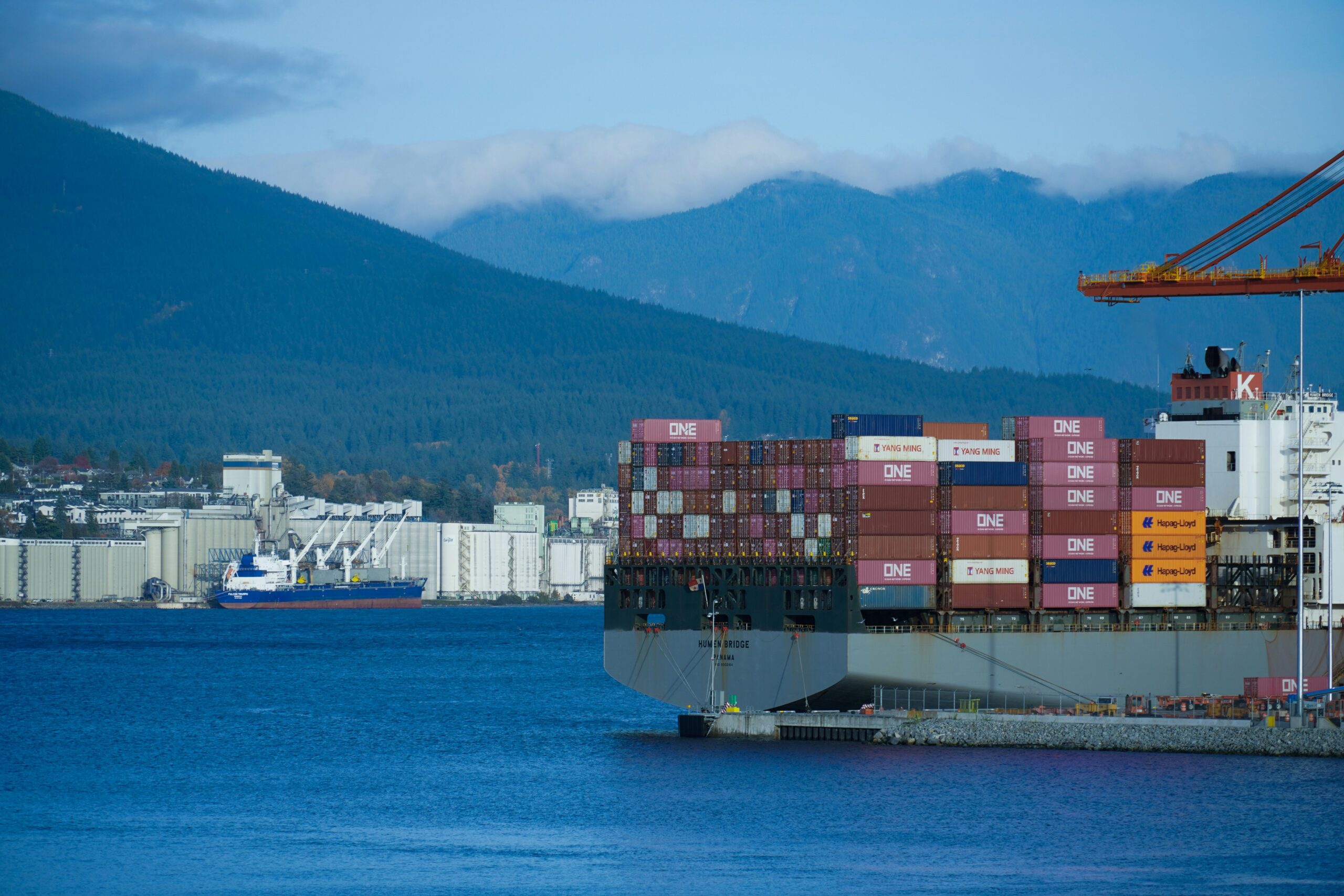
U.S. importers are facing a combined challenge this month, with the arrival of U.S. port tariffs for Chinese vessels and the ongoing Government shutdown, which has reduced staffing levels across critical federal agencies. 

Fewer inspectors and overstretched air traffic controllers are already creating delays at airports, rippling through international cargo networks. At the same time, congestion at major ports is intensifying, adding to vessel delays and squeezing container availability. 

For shippers, this translates into longer transit times, unpredictable schedules, and rising costs across sectors from automotive to e-commerce.

Overlaying these disruptions is the fast-approaching introduction of new USTR port fees targeting Chinese vessels. From 14 October, carriers will be required to prove fees have been paid in advance or risk being barred from unloading at U.S. ports, and China has now unveiled its own countermeasures.

With the financial burden falling squarely on operators, estimates suggest major carriers could face billions in additional costs. This has prompted urgent calls from industry leaders for mitigation strategies, though so far responses remain limited. For now, both sides of the port fee dispute appear prepared to absorb short-term impacts while deploying regulatory measures for bargaining power.


Ocean
  • Rates continue to trend down in early October, but carriers have announced general rate increases (GRIs) for the second half of the month. Analysts note these may be difficult to sustain given current muted demand.
  •  Asia–Europe has experienced a sharper rate decline around Golden Week compared with Transpacific, reflecting broader weakness in Europe beyond seasonal patterns.
  • Further increases are expected in November if demand strengthens into peak season, though success will depend on how blank sailings balance the market.
  • Vessel schedule changes and port omissions continue to disrupt flows, contributing to longer origin dwells and some rolling on full vessels.
  • Equipment availability in Southeast Asia has been affected by recent typhoon-related disruptions, causing challenges in repositioning containers.
  • Space is generally open, but carriers are loosely managing allocations.
  • Blank sailings remain in place through the next two weeks, expected to reduce capacity by around 17%, impacting dwell times and increasing the risk of rollings.
Air

Central China

  • SHA: Market remains hot ahead of the holiday, with auto parts driving demand. Space is full prior to 1 October, but airlines are expected to release limited spot options between 2–10 October. Rates climbed early in the week and may soften slightly after the holiday.
  • NGB: Space is tight and quoted case by case. Airlines continue to manage allocations closely during the holiday period.

North China

  • TSN: Market is warm. SQ/JL offer lower-cost routes to LHR with longer transit times, while KE/OZ provide earlier ETDs. Bookings require 4–7 days’ lead time depending on carrier.
  • DLC/PEK: Carriers are holding rates stable. Dense shipments can secure spot space, but larger volumes need advance booking and may require split flights.
  • TAO: Market stable into EU hubs. Airlines are still releasing spot options, particularly for dense and volume cargo.

South China

  • CAN: Space tightened ahead of the holiday. Carriers are expected to mark up rates at the weekend, with all bookings handled case by case.
  • SZX: Market is stable, though airlines are nudging rates higher. All space is confirmed individually.
  • XMN: Space is very tight before the holiday, with promotional rates being released for specific dates.
Ocean
  • October rates decreased across most lanes, although carriers have signalled potential increases in the second half of the month as demand is expected to pick up post-Golden Week. FAK contracts remain lower than long-term deals, and no PSS has been applied on LT contracts. Demand overall stayed muted through early October, with no significant peak ahead of the holiday period.
  • Carriers have increased blank sailings to balance supply with softer demand, particularly in the run-up to Golden Week. Capacity dropped in weeks 40 and 41, down by up to 28% on the US West Coast, though the East Coast saw a temporary 46% rise. Capacity is expected to rebound quickly after Golden Week, with space remaining accessible overall.
  • Port congestion remains manageable on both coasts. With demand subdued, space availability is good despite reduced sailings.
  • New U.S. measures on Chinese-built or Chinese-operated vessels are set to take effect from 14th October, with fees starting at $50 per net ton or $120 per TEU, increasing annually. These are capped at five voyages per vessel per year. Additional tariffs on Chinese goods, including furniture and lumber, will also begin mid-October. The temporary U.S.-China trade agreement expires on 10th November; without renewal, tariffs on Chinese imports could jump back to 145%, adding further uncertainty.
Air

Central China

  • SHA:
    • USWC: Market stable ahead of the holiday. Dense cargo space remains constrained, particularly at LAX, while SFO is more balanced.
    • USEC: Market “hot” with tight space due to recent flight cancellations. Ecommerce flows are lighter pre-holiday, but general cargo bookings are strong and harder to confirm.
  • NGB: Space remains tight and all bookings are handled case by case.

North China

  • TSN: Market hot, with KE/OZ/JL freighters offering earlier ETDs. Lead times of 4–5 days are required.
  • DLC/PEK: Most carriers stable, UA flights fully resumed. Dense shipments can still access spot space, but high-volume cargo needs 6–7 days’ notice.
  • TAO: Market hot, particularly to the East Coast where space is very tight. Spot bookings remain available for dense or urgent cargo.

South China

  • CAN: Peak-season pressure building, with further increases likely over the weekend. Final rates checked case by case.
  • SZX: Market steady but expensive, with bookings managed directly with carriers.
  • XMN: Space very tight into the holiday, particularly on East Coast routes (JFK/ORD). Carriers expected to raise rates further into October.
Ocean
  • October continues to see falling rates across the trade, following on from September’s reductions. While space is generally available, pockets of congestion remain, particularly at Colombo, causing intermittent delays.
  • Operationally, service updates include MSC reinstating Karachi as a direct call with extended transit options, while Chattogram faces minor disruption from berthing congestion, and Colombo’s high yard density continues to affect terminal operations. Bangladesh’s revised tariff schedule is due to take effect from mid-October.
  • Schedule reliability dipped slightly by 1.5 percentage points in July/August, now averaging 71%. Carrier performance varied widely, with MSK/HPL holding strong above 90%, while others such as MSC showed notable declines.
  • Recommendation to book at least two weeks in advance to secure target sailings amid ongoing congestion and operational variability.
Ocean
  • New port charges on Chinese-built and Chinese-operated vessels are due to take effect on 14 October, adding regulatory and cost pressure to carriers operating on the trade.
  • Stable but oversupplied market, with demand between Europe and the U.S. steady, though carriers continue to deploy additional tonnage and larger vessels. This has led to oversupply relative to demand, prompting blank sailings to balance capacity.
  • MSC has replaced its NEWUSEC1 service with the Albatros rotation, maintaining USEC coverage but removing London Gateway from the loop. This reduces available capacity for European shippers and cuts back alternative sailing options.
  • Ongoing congestion at both European and U.S. East Coast ports continues to extend transit times, even when vessels depart Europe on schedule.
  • Weekly capacity is fluctuating sharply, with significant reductions in weeks 41 and 45 before recovering later in the quarter. Customers should plan for reduced flexibility and fewer backup options as carriers consolidate sailings.
USA

Ocean

  • Los Angeles/Long Beach: No vessels waiting; average 6-day rail dwell.
  • Oakland: 3 vessels waiting; 7-day rail dwell.
  • Seattle/Tacoma: No vessels waiting; 5-day rail dwell.
  • New York/New Jersey: 3 vessels waiting; 3-day rail dwell.
  • Norfolk: 6 vessels waiting; 3-day rail dwell.
  • Savannah: 2 vessels waiting; 2-day rail dwell.
  • Vancouver: 3 vessels waiting; 5-day rail dwell.
Benelux

Antwerp

  • PSA 913: Yard utilisation increased to 80–85%, with reefer utilisation steady at 60–65%.
  • PSA 869: Yard utilisation eased to 65–70%, with reefers stable at 45–50%.
  • AGW: Yard utilisation stable at 55–60%, reefers slightly reduced to 50–65%, empties steady at 80–85%.

Rotterdam

  • ECT: Yard stable at 65–70% utilisation.
  • RWG: Yard remains at a critical level of 80–85%.
  • DELTA II: Yard at a low level of 25–30%, reefers stable at 30–35%.
  • APMT MVII: Yard stable at 85–90%.
UK
  • Eight major trailer manufacturers, including Schmitz Cargobull, Krone and Kögel, are challenging new EU climate regulations in court, arguing that mandated CO₂ reduction targets for trailers are unrealistic and could push up costs by as much as 40%. They warn the measures risk increasing emissions in practice and jeopardising more than 70,000 jobs.
  • CMA CGM has announced the acquisition of Freightliner UK Intermodal Logistics, covering its rail and road operations as well as inland terminals. The deal, expected to close in early 2026, will add firepower to CMA CGM’s intermodal presence in the UK and support its shift towards lower-carbon transport by connecting sea, rail and road.

Europe Public Holidays

We anticipate a shortage of availability and the occurrence of delays around the bank holiday periods. Plan ahead and allow extra time for your products to be delivered.

  • October 9 (Thursday): Spain*
  • October 10 (Friday): Austria*
  • October 11 (Saturday): Macedonia
  • October 12 (Sunday): Spain
  • October 13 (Monday): Spain*
  • October 14 (Tuesday): Moldova*
  • October 23 (Thursday): Hungary, Macedonia
  • October 24 (Friday): Hungary
  • October 26 (Sunday): Austria
  • October 27 (Monday): Ireland (Eire)
  • October 28 (Tuesday): Cyprus, Czech Republic, Greece, Türkiye*
  • October 29 (Wednesday): North Cyprus, Türkiye
  • October 31 (Friday): Germany*, Slovenia
  • Nov 1 (Saturday): Andorra, Austria, Belgium, Bosnia and Herzegovina (FBiH), Croatia, Finland, France, Germany, Holy See (Vatican City), Hungary, Italy, Liechtenstein, Lithuania, Luxembourg, Monaco, Poland, Portugal, San Marino, Slovakia, Slovenia, Spain, Sweden, Switzerland*, Åland (Ahvenanmaa)
  • Nov 2 (Sunday): Belgium*, Lithuania, Russia, San Marino
  • Nov 3 (Monday): Russia
  • Nov 4 (Tuesday): Russia
  • Nov 7 (Friday): Belarus, Transdniestria (PMR)
  • Nov 10 (Monday): Spain*
  • Nov 11 (Tuesday): Austria*, Belgium, France, Poland, Serbia
  • Nov 13 (Thursday): Montenegro
  • Nov 14 (Friday): Montenegro, Saint Helena
  • Nov 15 (Saturday): Austria*, Belgium*, North Cyprus
  • Nov 17 (Monday): Czech Republic, Latvia
  • Nov 18 (Tuesday): Croatia, Latvia
  • Nov 19 (Wednesday): Germany*, Monaco
  • Nov 21 (Friday): Bosnia and Herzegovina (FBiH)*
  • Nov 22 (Saturday): Albania
  • Nov 24 (Monday): Albania
  • Nov 25 (Tuesday): Bosnia and Herzegovina (FBiH)*
  • Nov 28 (Friday): Albania
  • Nov 29 (Saturday): Albania
  • Nov 30 (Sunday): Romania

The route ahead

The information that is available in the Zencargo Market Update comes from a variety of online sources, partners and our own teams. Click below to learn more about how Zencargo can help make your supply chain your competitive advantage.

Get In Touch

Event